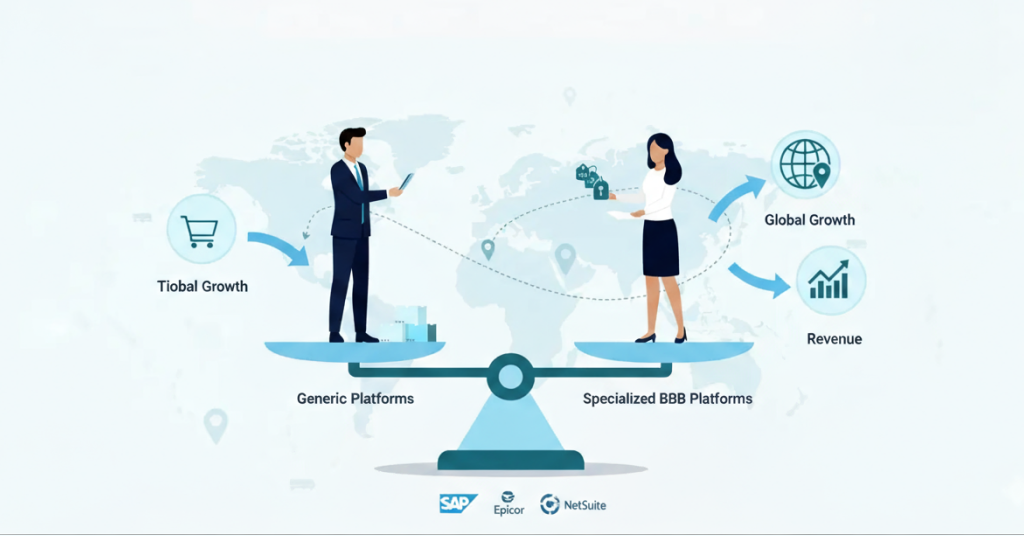
Choosing the right B2B eCommerce platform is no longer just a tech decision; it’s a strategic one. Distributors operate in a complex landscape where customer expectations are rising, operational efficiency is non-negotiable, and digital differentiation can define long-term growth. As a result, the decision to invest in a B2B-specific platform should be guided not by broad eCommerce trends, but by the unique demands of distribution.
In this guide, we move beyond the basics and help you evaluate the critical features that actually impact your revenue, customer retention, and internal operations. With global supply chain disruptions and margin pressure, distributors must also consider how the right platform can improve resilience and scalability while unlocking new channels of growth.
Addressing Distribution-Specific Complexity
Distributors don’t sell like retailers. Every transaction might involve negotiated pricing, customer-specific catalogs, complex fulfillment routes, and integration with legacy ERP systems. A generic B2C eCommerce platform may offer flashy UX but fails to capture these nuances.
When evaluating your platform, look for support for tiered pricing, bulk ordering, account-specific experiences, punchout catalogs, and approval workflows. These aren’t luxuries: they’re baseline requirements to avoid sales friction. Additionally, the platform should enable role-based access controls and handle multi-level decision workflows for large procurement teams, helping reduce cycle times and manual intervention.
Integration is the Backbone of Scalability
Your eCommerce solution must connect seamlessly with your ERP, CRM, PIM, and other back-office systems. In the distribution world, disconnected systems mean mismanaged inventory, delayed orders, and a frustrated sales team. Real-time data synchronization isn’t a future upgrade; it’s a necessity from day one. Evaluate the platform’s integration flexibility, available APIs, and middleware support. Native connectors to popular ERPs like Epicor, SAP, or NetSuite can significantly reduce your IT overhead. Moreover, a flexible integration framework allows you to adapt quickly to changing customer expectations or new tools, enabling your tech stack to evolve alongside your business model.
Customer Experience in B2B: Not a Buzzword, a Differentiator
Your customers expect the same ease they experience in B2C but with B2B depth. That means advanced search, fast reordering, mobile optimization, quote-to-order workflows, and personalized dashboards. If your platform can’t provide a frictionless digital experience tailored to buyer roles and past behavior, you risk losing them to a competitor that does. In fact, according to McKinsey, 80% of B2B buyers now expect a B2C-like experience.
A good B2B platform should also support customer self-service portals for invoice tracking, RFQs, delivery timelines, and purchase history all contributing to long-term customer loyalty.
Speed, Support, and Customization
Time-to-market is crucial. Evaluate whether the platform offers out-of-the-box features for distributors or if you’ll need to spend six months customizing it to fit your workflow. Also, check the vendor’s B2B roadmap and their technical support standards.
Do they understand your industry? Are they investing in AI-powered recommendations, omnichannel orchestration, and headless commerce for B2B use cases? Choose a platform that grows with you, not one you outgrow. Customization must not only support front-end flexibility but also enable deep backend business logic configuration such as shipping rules, territory assignments, and margin controls.
Evaluating TCO: Beyond Licensing Fees
Don’t let low sticker prices fool you. The total cost of ownership (TCO) includes licensing, implementation, hosting, support, updates, integrations, and ongoing enhancements. Distributors often require deep customizations, which can balloon costs if your platform lacks extensibility. Opt for a transparent pricing model that scales with your business, not just your traffic. More importantly, look for platforms that allow non-technical teams to manage product data, configure workflows, and launch campaigns without constant developer dependency, this reduces long-term operational cost and increases agility.
Security, Compliance, and Future Readiness
Distributors often serve heavily regulated industries, think pharmaceuticals, industrial supplies, or defense. Your platform must comply with GDPR, CCPA, SOC 2, and industry-specific standards. Also, ensure it supports multi-site, multi-currency, and multi-language use cases.
As you expand globally or through M&A, these features will determine how fast you can onboard new customers. Built-in audit logs, data encryption, SSO capabilities, and role-level permissions also help ensure secure operation and reduce risk exposure.
Why DCKAP is Purpose-Built for Distributors
DCKAP understands the operational DNA of distributors. The DCKAP platform is equipped with customer-specific pricing engines, advanced search, AI-powered product recommendations, quick order pads, and a mobile-optimized buying experience. It integrates effortlessly with ERPs like Epicor, SAP, and Microsoft Dynamics.
More importantly, DCKAP is not just a platform : it’s an ecosystem. With built-in connectors, analytics modules, and a commerce-first PIM, it reduces your reliance on third-party bolt-ons and ensures everything works in sync.
Unlike generic solutions, DCKAP also enables frictionless reordering, quote management, and custom catalog experiences per account. Its emphasis on speed, flexibility, and user experience makes it a clear winner for mid-size to enterprise-level distributors looking to scale operations without sacrificing agility.
The platform is backed by a team of B2B experts who provide onboarding, strategy consulting, and ongoing optimization ensuring that your digital investments drive measurable business outcomes.
Conclusion: Strategic Fit Over Shiny Features
Choosing a B2B eCommerce platform isn’t about features, it’s about strategic fit. As a distributor, you need technology that reflects the complexity of your pricing, your inventory, your buyers, and your operations. A generic platform may help you launch faster, but a distribution-focused solution like DCKAP helps you grow faster, with fewer trade-offs.
In the end, success in B2B commerce isn’t just about going digital. It’s about going digital with the right partner. Prioritize platforms that align with your workflows, support your long-term roadmap, and evolve with industry shifts not just those with trendy dashboards or short-term ROI promises.