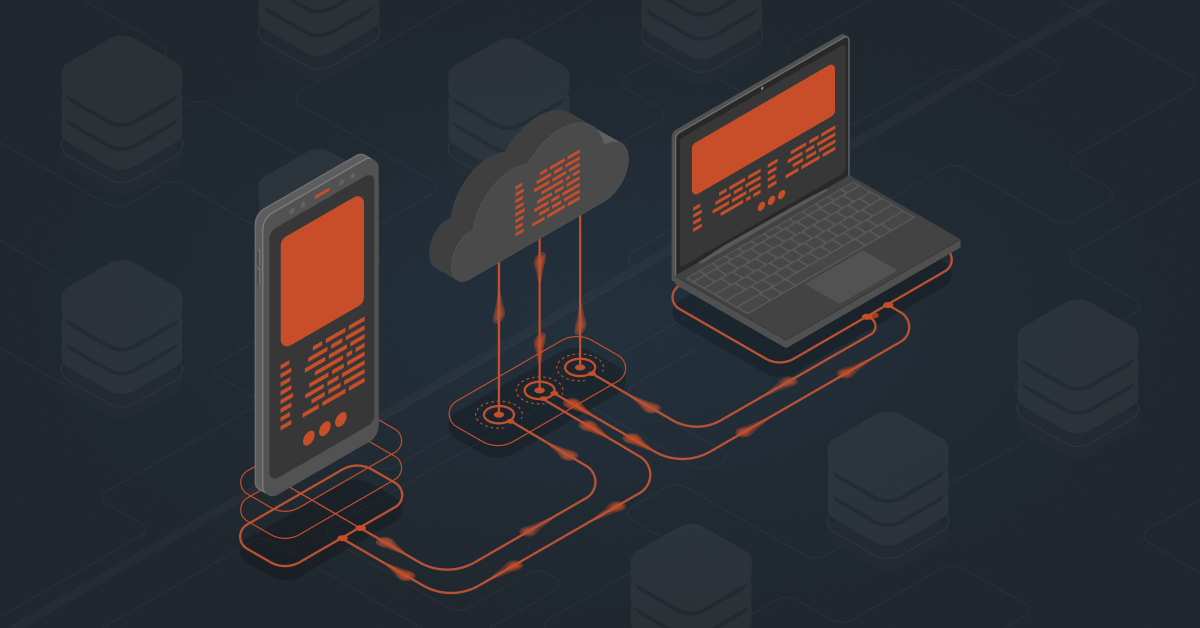
B2B API integration links business systems from different organizations. It uses an application programming interface. This lets data flow automatically between them. Modern API integration platforms unify many data sources behind a handful of application programming interfaces, so partners can plug in without rewiring internal systems.
What is B2B API Integration, Really?
The ‘B’ in B2B stands for Business-to-business. And the API acts like a contract. It defines requests and responses that let one company’s software connect with a partner’s, vendor’s, or customer’s software automatically.
When an order ships, the customer’s portal receives tracking information. That’s B2B API integration at work. APIs manage real-time data exchange between business partners. They synchronize workflows and business processes in real time, so every instance of an order, invoice, or shipping update flows without delay. It also ensures that data providers and consumers have a single source of truth.
B2B API integration works alongside older methods, like Electronic Data Interchange. EDI remains the leader in supply chains where partners use formats like X12 and EDIFACT. APIs provide real-time information. They also use flexible data formats. Plus, they make onboarding easier for partners who haven’t switched to EDI.
What Are The Top Ways For B2B Integration?
The right platform often mixes different methods. It relies on workflow, partner tech stack, and data freshness. Each approach plays a pivotal role in shaping integration—the power of APIs, after all, is what unlocks new business growth for B2B teams.
Hybrid EDI and API integration
For decades, EDI has powered B2B integration in retail, manufacturing, and logistics. It sends standard documents. These include purchase orders, invoices, and advance shipping notices. Trading partners use them to communicate.
Modern B2B integration solutions usually don’t completely replace EDI. Instead, they add APIs on top of it. EDI handles high-volume, batch document exchanges with partners using X12 or EDIFACT.
APIs, however, provide real-time information. They also offer analytics feeds and partner interactions that EDI can’t manage well.
Third-Party Integration Platforms
Integration platforms combine different architectural styles. It provides data interfaces, mapping tools, scheduling, monitoring, and error handling. This means you don’t have to connect REST, SOAP, webhook, and EDI flows individually.
It cuts down on engineering effort. It also offers one source of truth for all integrations. Plus, it scales easily as new B2B systems, apps, and trading partners join. Tools like DCKAP Integrator, Boomi, MuleSoft, and Jitterbit belong to this group.
API Gateway / API-Led Connectivity
An API gateway sits in front of your APIs. It centralizes tasks like authentication, rate limiting, logging, and routing. API-led connectivity improves integration. It splits the data into reusable System, Process, and Experience APIs.
This means the same partner-facing endpoint can be used for web apps. It also works for mobile apps and internal systems. This model transforms a set of endpoints into a manageable platform for B2B API integrations.
Also see: Top 10 API Integration Platforms for Distributors
Top B2B API Integration Use Cases
API integrations show up across virtually every modern B2B workflow. These are the use cases that come up most often in real B2B integration landscapes:
Order management and fulfillment
The API integration platform connects buyer orders to the supplier’s ERP via portals or apps. This system picks, packs, invoices, and fulfills orders. The same functionality increasingly comes through a mobile application or multiple mobile applications, allowing salespeople and warehouse staff to process orders from anywhere.
Real-time inventory and pricing sync
APIs help keep product catalogs in sync. They also manage customer price lists and inventory levels. This works across ERP, eCommerce, and partner systems. Buyers see contract pricing and livestock; sellers prevent overselling and stale data.
Supplier and partner onboarding
Self-service APIs help trading partners connect easily. They can upload catalogs. They can submit POs. They can also check shipment status. There’s no need to wait for a manual integration project. This is one of the most underrated use cases in the B2B integration landscape.
EDI modernization
Many companies layer APIs on top of existing EDI platforms. EDI handles the main transactional documents. APIs give real-time visibility and analytics. They also connect with Cloud Services that EDI can’t manage well.
Payments, finance, and credit
Payment APIs and finance integrations connect AR/AP systems to banks, processors, and credit data providers. Pushing invoices, applying payments, and reconciling funds takes minutes, not days.
Product integrations across software applications
Modern B2B products include B2B API integrations. These features link their platform to software that customers already use. This includes CRMs, helpdesks, and analytics tools. This way, customers don’t have to handle that setup themselves.
Shipping, logistics, and tracking
FedEx, UPS, USPS, DHL, and local LTL APIs help businesses. You can compare rates. Labeling and scheduling pickups are simple. The ERP and customer portal receive live tracking updates. Similar APIs help distributors and manufacturers share proof-of-delivery with 3PLs. Additionally, they connect to customs platforms for international shipments.
Analytics, BI, and data warehousing
B2B APIs help in analytics as well. Shipments, stocks, orders, and customer data are sent. Data goes to Snowflake, BigQuery, and Redshift. Real-time pipelines replace nightly extracts. So leaders can see business events in real time.
Identity, SSO, and user provisioning
B2B platforms increasingly use OAuth 2.0, OpenID Connect, and SCIM. They control single sign-on and user life cycles. IT teams may monitor users across all B2B platforms, prevent password sprawl, and reduce unwanted access.
Customer support and helpdesk integration
Zendesk, Salesforce Service Cloud, Freshdesk, and HubSpot APIs streamline B2B tickets. Agents see orders, shipments, and accounts. Also, they route SLA-based escalations between systems. In complex B2B customer experiences, centralization helps.
What Are Common Challenges?
B2B integrations are more complex than B2C because of custom pricing tiers, account hierarchies, complex inventory logic, and legacy ERP constraints. The most frequently cited challenges include:
1. Data inconsistency across systems: Different systems store data in different formats (date formats, UOM codes, product IDs). A robust integration platform must handle transformation and normalization automatically.
2. ERP limitations and outdated APIs: Older ERPs may have limited or poorly documented APIs. DCKAP has deep expertise integrating with legacy systems like Epicor P21 and Eclipse, which require specialized connector knowledge.
3. Real-time sync vs. batch processing trade-offs: Not all data needs real-time sync but orders and inventory often do. DCKAP Integrator lets you configure sync frequency per data type, balancing performance with ERP load.
4. Error handling and visibility: Failed syncs can cause overselling, missed orders, or billing errors. DCKAP Integrator provides a centralized dashboard with detailed logs, error alerts, and retry mechanisms so your team can catch and resolve issues quickly.
5. Scalability as order volumes grow: Integration architecture must scale with the business. DCKAP’s cloud-native iPaaS is built for high transaction volumes without degradation.
Best Practices While You Prepare For B2B API Integration
The essential strategies below highlight real benefits across many processes, with each essential strategy addressing a specific operational risk or partner-experience benefit.
- Start with contract-first API design: Publish your OpenAPI spec before writing any code. A clear contract eliminates rework with business partners and shrinks onboarding time.
- Authenticate properly: Instead of API keys, use OAuth 2.0, JSON Web Tokens, or mutual TLS. Control access by role. This prevents unwanted and unauthorized access, blocking unauthorized access at the perimeter and addressing data security concerns alongside other security issues early.
- Version your APIs: Adopt semantic versioning and announce deprecations early. Breaking changes are the #1 source of partner frustration. Give partners a 90-day window minimum before retiring an endpoint.
- Validate data and ensure master data quality: Check each request before sending it downstream. Enforce master data rules, like units, currencies, product codes, and customer IDs, at the boundary. This way, data quality issues won’t reach the ERP or trading partner.
- Sandbox before launch: Test integrations in a sandbox before going live. Surprises in production are the most expensive kind.
- Document for partners with clarity by providing endpoint references, authentication notes, request/response examples, and use cases. Good docs are the difference between a connector that ships and one that stalls.
- Invest in operational tools: Use pre-built connectors. Monitoring dashboards help track performance. Retry queues and replay tools cut total ownership costs, significantly lowering the total cost of ownership.
DCKAP: ERP-First Integration For Distributors & Manufacturers
Most general-purpose platforms for B2B integration treat ERP as one connector among many. DCKAP takes the opposite approach. DCKAP Integrator is an integration platform designed specifically for distributors and manufacturers. These businesses rely on their ERP as the main system for orders, inventory, pricing, customers, and finance.
The platform offers a low-code interface. It features drag-and-drop flow designers and a library of pre-built connectors. They include Epicor, Oracle NetSuite, Microsoft Dynamics 365, SAP, Infor, Sage, and Distribution One. It also connects to eCommerce platforms such as Adobe Commerce, BigCommerce, Shopify, and EvolutionX. Additionally, it integrates with CRMs like Salesforce and HubSpot. The DCKAP team manages mappings, validations, and changes. This allows internal teams to focus on the business, not the plumbing.
DCKAP Integrator is a great choice for distributors and manufacturers. A few main points stand out for buyers evaluating B2B integration platforms, and the main point is this: the ERP-first approach beats generalist tooling every time for these industries.
Final Thoughts
B2B API integration is no longer optional for modern businesses. APIs link B2B systems. This makes business operations smooth, delivering value across every supply chain process. They move data accurately between trading partners. They also cut down on manual work. Plus, they give teams real-time information to act on.
Connecting an ERP to an eCommerce store or syncing inventory can be tricky. The right platform is key. When paired with good practices, it helps your integration stay effective. This way, it won’t become a maintenance hassle.
FAQs
What is B2B API integration, and why does my business need it?
B2B (business-to-business) API integration is the process of connecting two or more enterprise systems such as an ERP, eCommerce platform, CRM, or PIM so they can automatically exchange data in real time without manual intervention. Instead of re-entering orders, inventory levels, or customer data across systems, your platforms “talk” to each other through APIs (Application Programming Interfaces).
Disconnected systems lead to data silos, order errors, delayed fulfillment, and wasted labor. For distributors, manufacturers, and wholesale businesses, seamless integration is foundational to digital commerce success.
How does API integration differ from EDI, and which is better for B2B?
EDI (Electronic Data Interchange) uses standardized document formats (like ANSI X12 or EDIFACT) to exchange structured business documents (POs, invoices, ASNs) between trading partners. It is widely used in retail supply chains and with large retailers or 3PLs.
API integration uses modern REST or SOAP protocols to connect systems in real time with greater flexibility, speed, and customization.
| Feature | EDI | API Integration |
|---|---|---|
| Speed | Batch (hours/days) | Real-time or near real-time |
| Flexibility | Rigid, standard formats | Highly flexible |
| Cost to implement | High | Lower with modern iPaaS tools |
| Best for | Large retailers, 3PLs | ERP-eCommerce, CRM, PIM connectivity |
Many B2B businesses need both. DCKAP Integrator supports EDI workflows alongside API-based integrations, so distributors can serve both legacy trading partners and modern eCommerce channels from one platform.
What systems can be integrated through a B2B API integration platform?
Modern B2B businesses operate across a complex stack of systems. Common integration use cases include:
- ERP ↔ eCommerce syncing products, pricing, inventory, orders, and customer accounts
- ERP ↔ CRM keeping sales reps informed of order history and account status
- PIM ↔ eCommerce pushing enriched product data to your online storefront
- ERP ↔ 3PL / WMS automating warehouse and shipping workflows
- ERP ↔ Marketplace connecting to Amazon Business, Grainger, or similar channels
- ERP ↔ Accounting syncing invoices and payments with tools like QuickBooks or Sage
DCKAP Integrator offers pre-built connectors for leading B2B platforms including Epicor P21, Eclipse, NetSuite, SAP, Microsoft Dynamics, Magento (Adobe Commerce), BigCommerce, Shopify Plus, Salesforce, and more. Pre-built connectors dramatically reduce implementation time compared to custom API development.
Is a custom-built API integration better than using an integration platform like DCKAP Integrator?
This is one of the most common questions for B2B IT teams evaluating integration strategies.
Custom-built integrations offer maximum flexibility but require significant developer resources to build, maintain, and update whenever either connected system changes (e.g., an ERP upgrade or eCommerce platform version change).
Integration platforms like DCKAP Integrator provide:
- Pre-built, maintained connectors that update with platform changes
- No-code / low-code configuration for business users
- Centralized monitoring and error management
- Faster time-to-value and lower total cost of ownership
- Built-in scalability without additional infrastructure investment
For most B2B distributors and manufacturers, an iPaaS like DCKAP Integrator delivers faster ROI than custom development especially when connecting to commonly used ERPs and eCommerce platforms where connectors already exist. Custom builds make sense only for truly unique systems with no pre-built connector options.
How do I measure the ROI of a B2B API integration investment?
ROI from B2B API integration comes from multiple directions cost savings, revenue enablement, and error reduction. Key metrics to track:
Operational savings:
- Hours per week eliminated from manual data entry
- Reduction in order errors and related customer service costs
- Time saved on inventory reconciliation
Revenue impact:
- Increase in online order volume enabled by accurate real-time inventory
- Reduction in lost sales due to overselling or catalog gaps
- Faster order fulfillment driving repeat purchases
System efficiency:
- Reduction in ERP-to-eCommerce sync lag
- Decrease in support tickets related to data discrepancies