For B2B wholesale distributors, moving quickly from quote to order matters. But when HubSpot and Epicor Eclipse don’t connect, sales teams have to work across disconnected systems. Leads are in HubSpot, while order history, pricing, invoices, and stock data sit in Eclipse.
With HubSpot Epicor Eclipse integration, sales teams can bring this ERP data into their CRM and get the information they need to follow up faster, process orders, and drive repeat business.
Different Ways to Integrate HubSpot with Epicor Eclipse
There are three common ways to connect HubSpot with Epicor Eclipse: middleware, custom API integration, and flat-file or ETL sync.
1. Middleware
Middleware sits between HubSpot and Epicor Eclipse and manages data exchange between the two systems.
It handles connections, security, data mapping, monitoring, and failed transactions, so your team doesn’t have to maintain the integration code.
Best for: Businesses that need scalable, real-time or near-real-time syncing across customers, products, pricing, orders, and inventory.
2. Custom API Integration
Your development team builds and manages the connection using HubSpot and Eclipse APIs.
This gives you full control over the data flow and business logic, but your team is responsible for hosting, monitoring, updates, and maintenance.
Best for: Businesses with an internal development team and custom integration requirements.
3. Flat-File or ETL Sync
Data is exported from Eclipse into files such as CSV or XML and transferred to HubSpot on a set schedule This works for large datasets that don’t need real-time updates.
Best for: Historical sales data, reporting, and other scheduled data transfers.
Data Exchange Between HubSpot CRM and Epicor Eclipse
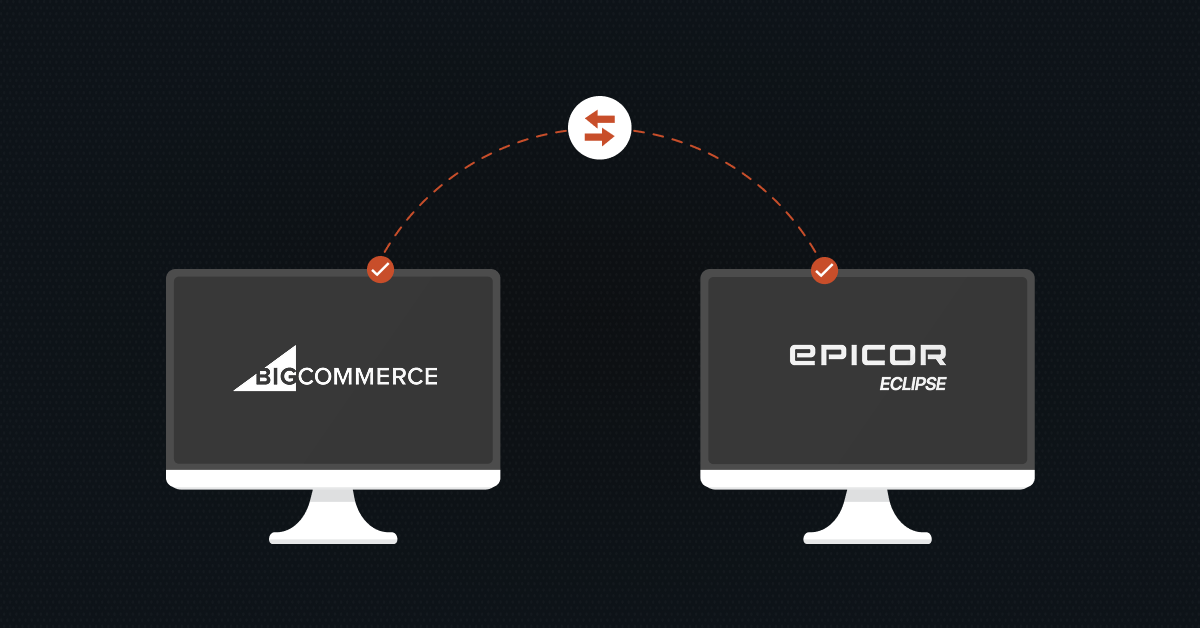
A HubSpot Epicor Eclipse integration can sync customer, product, inventory, and transaction data between the CRM and ERP.
From Epicor Eclipse to HubSpot
Eclipse sends ERP data to HubSpot so sales teams can see customer and order information without switching systems.
- Customer data: Customer ID, account details, addresses, payment terms, credit status, and outstanding balances.
- Contacts: Names, emails, phone numbers, roles, and branch details.
- Products and pricing: SKUs, descriptions, UOMs, standard pricing, customer-specific pricing, and inventory levels.
- Orders and invoices: Order history, line items, invoice details, payment status, shipments, and delivery updates.
From HubSpot to Epicor Eclipse
HubSpot sends sales and customer information to Eclipse to support order processing and customer setup.
- Leads and prospects: Companies, contacts, lead status, sales rep, and lifecycle stage.
- Quotes and deals: Won deals, SKUs, quantities, pricing, and shipping requirements.
- Account updates: New contact details, job titles, and shipping addresses.
How This Integration Impacts Your Business
A HubSpot Epicor Eclipse integration connects sales and marketing data with ERP data. For B2B distributors, that can mean faster order processing, better customer visibility, and less manual work.
Faster Quote-to-Order Processing
When a deal is marked Closed-Won in HubSpot, the customer details, SKUs, quantities, and pricing can move to Eclipse automatically.This removes manual rekeying and helps sales teams move orders into processing faster.
Better Customer and Inventory Visibility
Sales reps can see important Eclipse data in HubSpot, such as inventory, order history, invoice status, tracking information, and credit status.
They can check what a customer has bought, what is available, and whether there are account issues without switching between systems.
More Targeted Marketing
Bringing Eclipse purchase data into HubSpot gives marketing teams more useful customer insights. They can use this data to send reorder reminders based on buying patterns, identify customers who haven’t ordered recently and recommend related products based on previous purchases.
Less Manual Data Entry
Keeping customer, contact, product, and transaction data synced between HubSpot and Eclipse reduces duplicate entry and mismatched records. Sales, marketing, and accounting teams can work from more consistent data across both systems.
Common Challenges & Solutions of HubSpot Epicor Eclipse Integration
Connecting HubSpot with Epicor Eclipse can get complicated because the two systems handle data differently. Here are some common challenges and ways to address them.
Different System Architectures
- The challenge: Eclipse uses a multi-value database architecture, while HubSpot uses REST APIs. Connecting them directly can lead to data formatting and API errors.
- The solution: Use middleware such as DCKAP Integrator to handle the connection and translate data between the two systems.
Complex Pricing and Inventory
- The challenge: Eclipse can handle customer-specific pricing, unit-of-measure conversions, and branch-level inventory. Syncing all of this directly into HubSpot can make the data difficult to manage.
- The solution: Keep Eclipse as the source for pricing and inventory. Send the relevant customer pricing and inventory information to HubSpot instead of syncing every underlying ERP rule.
B2B Account Structures
- The challenge: A single Eclipse customer can have multiple ship-to locations, branches, or sub-accounts. If these relationships aren’t mapped properly, HubSpot can end up with duplicate or incorrectly linked records.
- The solution: Use unique Eclipse customer and ship-to IDs to map companies and their locations correctly in HubSpot.
Large Data Volumes and API Limits
- The challenge: Syncing thousands of products, invoices, or historical orders can put pressure on API limits and ERP performance.
- The solution: Use incremental syncing so only changed records are transferred. Larger updates can also be scheduled during off-peak hours.
Failed Syncs and Limited Visibility
- The challenge: If a transaction fails because of a network or data error, your team may not know that the information never reached the other system.
- The solution: Use integration logs, error alerts, and automatic retries so failed transactions can be identified and resolved quickly.
The ERP-First Approach to HubSpot Eclipse Integration
When connecting HubSpot with Epicor Eclipse, it makes sense to keep Eclipse as the source of truth for operational data.
Eclipse already manages important distributor data such as customer pricing, inventory, credit status, products, and order history. HubSpot can then use this data to support sales and marketing without replacing the business rules already set up in the ERP.
For example, a sales rep can create or close a deal in HubSpot, while Eclipse remains responsible for validating the customer, pricing, inventory, and order details before the order is processed.
How DCKAP Integrator Supports This Approach
DCKAP Integrator connects HubSpot and Eclipse while keeping the ERP at the center of the workflow.
- Data mapping: Connects customer, contact, product, pricing, inventory, order, and invoice data between the two systems.
- Managed integration: DCKAP manages the integration infrastructure, connections, security, and ongoing maintenance.
- Bi-directional sync: Moves data between HubSpot and Eclipse based on how each workflow is set up.
- Monitoring and error handling: Provides transaction logs and alerts to help teams track and resolve failed syncs.
- Scalable data exchange: Supports large data transfers without adding unnecessary work for internal IT teams.
This approach lets sales and marketing teams work with ERP data in HubSpot while keeping Eclipse responsible for the operational data and business rules.
Frequently Asked Questions
Is DCKAP Integrator an iPaaS or SaaS?
iPaaS is a cloud-based service that connects all the applications residing in the company cloud or on-premise. With the help of iPaaS, it gets easy for companies to use a single cloud platform for the deployment of the systems in various environments. SaaS is a platform to deliver subscription software services through the internet. Some examples that include SaaS are Dropbox, Salesforce, and Google Workspace. Therefore, DCKAP Integrator is an iPaaS solution.
Why choose DCKAP Integrator over creating an integration system in-house?
Companies are moving towards a compressed and single management system. Seamless data synchronization between eCommerce platforms, CRM, and ERP system, makes the workflow of the organizations easy. Certain factors help the companies in selecting DCKAP Integrator:
- Helps in accelerating customer data transfer throughout the information management system.
- Eliminates manual data entry and maintains the consistency of the product data.
- With simple ERP integration, DCKAP helps to save time and increase productivity.
- Provide an excellent customer experience throughout your business.
- Simplifying the company’s tech stack for multiple ecommerce sites and distribution centers.
- Adds agility to the digital environment by synchronizing order management through drag-and-drop functionalities.
Does DCKAP offer personalized solutions for Epicor Eclipse integration?
Definitely a YES! At DCKAP, we understand the requirements of every business. DCKAP Integrator is designed to offer distributors limitless integrations customized to their preferences. Watch the introductory walkthrough to see DCKAP Integrator in action.
How does integration improve customer experience?
Integration enables businesses to provide a personalized user experience after every contact, which is becoming a key demand from customers shopping online. In an omnichannel environment, businesses can personalize the experience down to currency, language, and user preferences both pre and post-purchase.
The valuable information provided by the integrator helps nurture leads and build strong strategies and relationships with users, which aids in increasing sales and decreasing lost opportunities. When leads understand the product and service thoroughly through proper nurturing, they become confident and loyal customers who make more significant investments than non-nurtured leads.
The integration also ensures that sales teams can provide accurate, real-time information about inventory, pricing, and order status, creating a smoother buying experience.
How does workflow automation work with this Eclipse HubSpot integration?
With automation, marketers can easily follow tasks and activities without any hassle. HubSpot automation workflows help in automating sent emails, property fillings, and list building, providing a better experience and easier operations for various prospects.
Automation helps with different manual workflows which might get tough to track, improving efficiency in work culture through routing leads to sales, email nurturing campaigns, sending internal notifications, list building and segmentations, and assigning or re-assigning properties.
Pairing HubSpot CRM with Epicor Eclipse enhances how your business communicates with customers by providing the right information to the right user at the right time, with automation aiding leads with relevant information without adding extra stress to your teams to deliver. This means routine tasks happen automatically while your team focuses on strategic activities that drive revenue.