INDUSTRY REPORT
PIM Solutions for Manufacturers and Distributors:
Why Most Fail and How to Finally Succeed
[ Author: Jason Hein ]
Apr 20, 2026
No time to read the Must-Read: Listen to the one-minute summary.
“PIM Solutions for Manufacturers and Distributors: Why Most Fail and How to Finally Succeed” – This report by Jason Hein is a clear practitioner-level diagnosis of why most B2B PIM initiatives fail-before the software is even selected.
Quick Summary
A practical guide that breaks down why PIM implementations in B2B environments consistently underperform and what must be done differently. The report is structured into three parts: diagnosing the real problem, building the data foundation, and only then evaluating platforms.
What You Will Learn
- Why most PIM projects fail before they begin due to incorrect problem diagnosis, not poor platform choice.
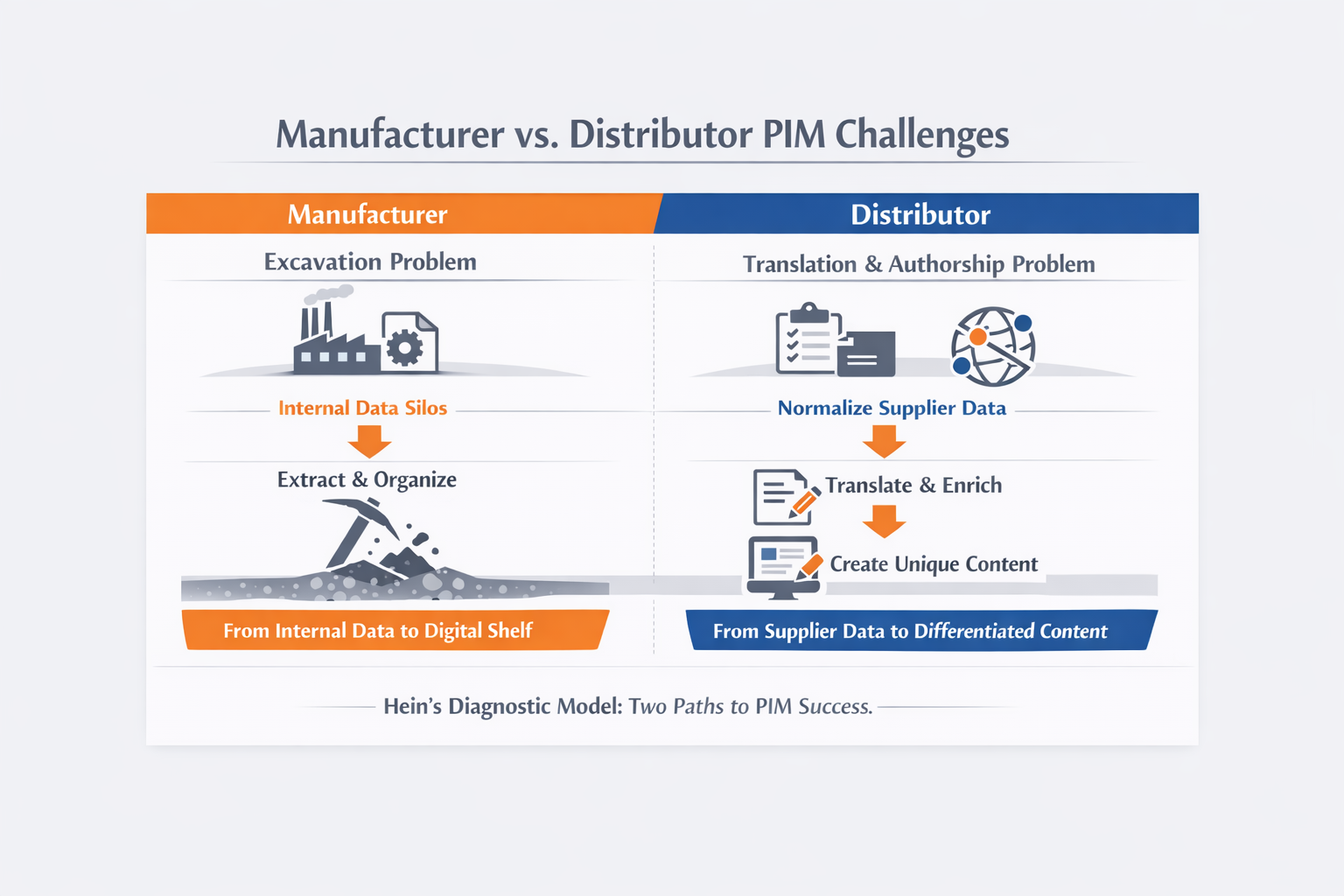
- The difference between the manufacturer’s “excavation problem” (structuring internal product knowledge) and the distributor’s “translation + authorship problem.”
- Why implementing a PIM without data standards, governance, and ownership guarantees repeated failure cycles.
- What “good product data” actually requires: defined attributes, validation rules, workflows, and clear accountability across teams.
- Why PIM success depends on treating it as a business capability, not an IT project or software purchase.
Why It Matters for Manufacturers & Distributors
Most manufacturers and distributors are investing in digital commerce but are still struggling with poor product data, broken search experiences, and low adoption. This report explains that these are not technology failures-they are foundational data problems. It also highlights that manufacturers and distributors face structurally different challenges, meaning a one-size-fits-all PIM strategy almost always fails.
Memorable Quotes from the Report
“A PIM is a container. Its value depends entirely on what goes into it and how consistently that content is maintained.”
“No feature set, however capable, compensates for undefined standards or unowned data.”
Visual Takeaway
DCKAP Insights
The “foundation before platform” principle in this report aligns closely with what determines success in real-world digital transformation projects. The distinction between manufacturer and distributor data problems is especially critical-and often overlooked in platform-led conversations.
Read This Report If
- You are evaluating a PIM and unsure what problem you are actually solving
- Your current product data is inconsistent, incomplete, or hard to scale across channels
- You have already implemented a PIM but are not seeing improvements in digital performance
Who Should Read It
This is a must-read for manufacturers and distributors who are investing in PIM (Product Information System) but struggling to get product data right.
Access the Resource
Available via B2B eCommerce Association (free guide)

About the Author
Jason Hein is a B2B digital commerce practitioner with over 20 years of experience helping manufacturers and distributors improve product data, taxonomy, and on-site findability. He has worked hands-on with large-scale product catalogs and advises organizations on turning digital from a side initiative into a core growth driver. Known for his practical frameworks and clear, no-jargon approach, he simplifies complex product content challenges for business leaders.

About the Curator:
Tamizh Selvan Dinakaran has over 25 years of experience helping businesses grow through digital marketing, particularly in the distribution and manufacturing sectors. He currently leads customer education at DCKAP, where he creates programs designed to help customers succeed in deriving value from DCKAP’s products. Previously, as DCKAP’s Director of Marketing, he focused on increasing brand awareness and generating leads through effective content marketing. Tamizh specializes in B2B content marketing, marketing operations, and customer success.
Read More Book Reviews



ERP Integration made simple for Manufacturers & Distributors.
Transform your commerce journey by creating an integrated experience for employees and customers.