If you’ve been researching analytics or modern data stacks, you’ve likely come across the terms “data warehouse” and “data mart” more than once.
But they’re often mentioned as if the choice between them is obvious. Understanding the difference is really important because it directly impacts how much you invest, how complex your setup becomes, and how quickly your team can start making better decisions.
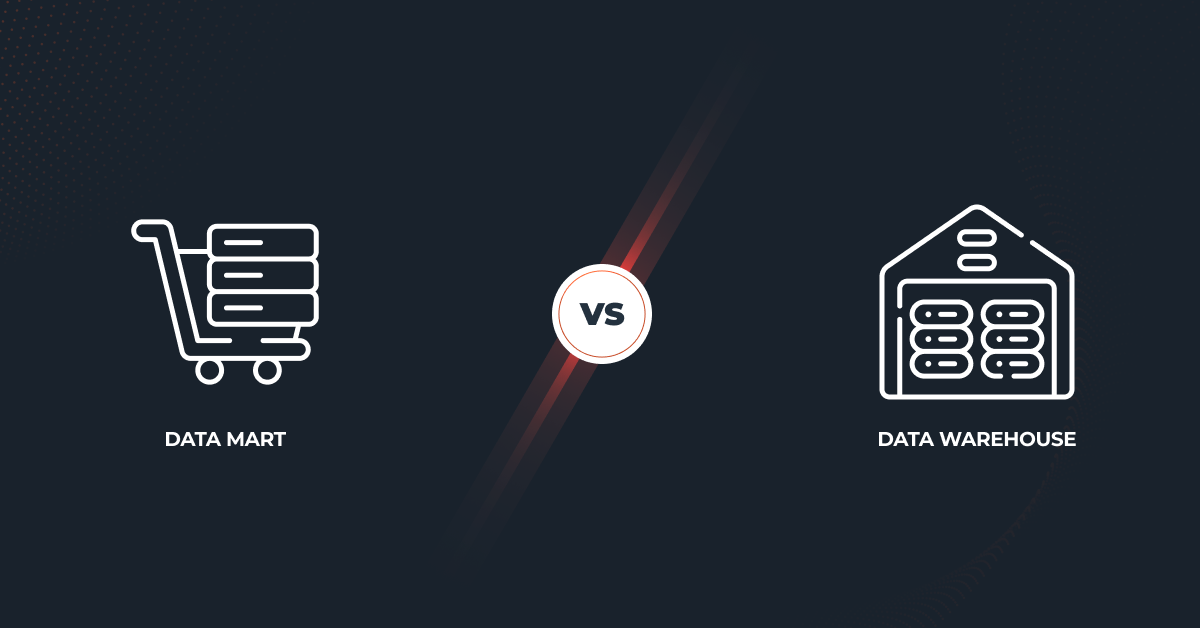
Data Mart vs Data Warehouse: What’s the Real Difference?
Both a data warehouse and a data mart help you store and analyze data. But they’re built for very different scales and specific needs. The easiest way to understand this is to break it down into a few key areas:
1. Scope
A data warehouse is built for your entire business. It pulls data from multiple systems, from sales, marketing, finance, operations and brings everything into one place.
A data mart, on the other hand, is much more focused. It’s usually built for a specific team or function, like marketing or sales.
Think of it like this, a data warehouse is your full company view while a data mart is just one team’s view.
2. Cost and Setup Time
A data warehouse is a bigger investment. It takes more time to plan, build, and maintain because you’re dealing with data across the entire organization.
A data mart is quicker to set up. Since it’s smaller and focused, you can get it running faster and at a lower cost.
3. Complexity
With a data warehouse, things get more complex. You’re integrating multiple data sources, cleaning and transforming data, and making sure everything stays consistent. This usually requires dedicated data engineering effort.
A data mart is much simpler. Fewer data sources, fewer dependencies, and easier to manage. It’s often something a smaller team can handle without heavy infrastructure.
4. Use Cases
A data warehouse is used for company-wide analytics. Leadership teams rely on it for strategic decisions, long-term trends, and a single source of truth.
A data mart is used for team-specific insights like tracking campaign performance, analyzing sales pipeline data or finance monitoring revenue. It’s more about solving a specific problem for a specific team.
Read more: Master Data Management Integration: A Comprehensive Guide
What Should Your Business Actually Choose?
What you choose here really depends on where your business stands today.
A growing distributor or manufacturer doesn’t need the same data setup as a large enterprise. The goal isn’t to build the most advanced system, it’s to build something that actually helps you run your operations better.
Data Mart
If you need answers fast, for a specific part of your business, a data mart makes more sense.
For example:
- You want better visibility into sales performance by region or distributor
- Your inventory data is messy, and one team needs clean reporting
- You’re trying to track order fulfillment or dispatch timelines
- One department keeps asking for reports, and it’s slowing everything down
It lets you fix one problem at a time without overhauling your entire system. You get quicker results, lower cost, and your team can actually start using the data without waiting months.
Data Warehouse
If you’re at a stage where everything needs to connect, for example:
- Your sales, inventory, and finance numbers don’t match across systems
- Leadership wants a single, reliable view of the business
- You’re scaling across regions, products, or channels
- Decision-making is slow because data is scattered everywhere
In this case, a data warehouse becomes important. It helps you bring all your data together and create one version of the truth. This is less about quick fixes and more about building a long-term foundation.
Can a Data Mart Replace a Data Warehouse or Vice Versa?
A data mart and a data warehouse are built for different purposes. One focuses on a specific team or function, while the other is designed to centralize data across the entire business.
That said, in some cases, a data mart can work as a temporary alternative to a data warehouse.
For example, if you’re a distributor mainly trying to improve:
- Sales reporting
- Inventory visibility
- Dispatch tracking
Then a focused data mart may already solve your biggest problems without the cost and complexity of a full data warehouse.It’s faster to implement, easier to manage, and often enough for growing businesses that don’t yet need company-wide analytics.
But as the business scales, things usually become more connected.That’s where a data warehouse becomes necessary. A data mart can only give you a partial view of the business.
On the other hand, a data warehouse can support the role of a data mart. Many businesses use a central data warehouse and then create smaller, department-focused views for Sales, Finance and Operations. So technically, a warehouse can do both.
But that doesn’t mean every business should start there. For many manufacturers and distributors, jumping straight into a data warehouse can lead to:
- Higher costs
- Longer setup times
- More complexity than they currently need
That’s why many businesses start with a data mart, solve one problem well, and then expand into a data warehouse as their reporting needs grow.
Common Mistakes Businesses Make While Choosing Between a Data Mart and a Data Warehouse
1. Building a Data Warehouse Too Early
A lot of businesses assume they need a full data warehouse when they really need better reporting in one area. If your biggest problems are delayed sales reports, poor inventory visibility or too much dependency on Excel, a focused data mart may be enough to start with. Building a warehouse too early can lead to high costs, long timelines, and systems teams barely use.
2. Trying to Solve Everything at Once
Many businesses try to centralize every department and every report from day one. That usually slows everything down. A better approach is to start with one high-impact area like sales reporting, inventory analytics, order tracking or financial reporting. Solve one problem properly first, then expand gradually.
3. Ignoring Data Quality Issues
A better system doesn’t automatically mean better data management. If your ERP entries are inconsistent or different teams maintain separate spreadsheets, your reports will still be unreliable. Before building dashboards, make sure your data is clean and structured.
4. Creating Separate Data Silos
Sometimes departments build their own reporting systems independently. This creates more unstructured data and confusion over time. Even if you start with a data mart, it should still fit into a larger long-term data strategy.
5. Choosing Tools Before Defining the Problem
Many businesses start evaluating tools before identifying what they actually need to fix. Instead, start by asking:
- What decisions are currently difficult to make?
- Which reports are missing?
- Which team needs visibility the most?
The right setup is not the most advanced one. It’s the one that solves real business problems clearly and consistently.
Also read: End Manual Data Chaos: Automated Warehouse Workflows With DCKAP Integrator
How an ERP-First Data Strategy Brings Everything Together
For most distributors and manufacturers, the ERP is already the center of the business. It handles inventory, orders, billing, procurement, dispatch and accounts.
So when terms like data warehouse and data mart come into the picture, the natural question is: If the ERP already has all the data, why do we need these systems at all?
The answer is simple: Your ERP helps you run the business. A data warehouse and data mart help you understand the business better.
How it works
In an ERP-first approach, the ERP remains the main source of truth. Every transaction still happens inside the ERP:
- Orders are created there
- Inventory gets updated there
- Payments are recorded there
- Operational data lives there
But most ERPs are built for operations, not advanced analytics. They’re great at telling you what stock you currently have, which invoices are pending and what today’s sales look like. But they struggle when businesses start asking larger analytical questions like:
- Which products are becoming less profitable over time?
- Which regions consistently face stock shortages?
- Which customers delay payments most frequently?
- What does inventory movement look like across multiple warehouses?
To answer these questions, a data mart and a data warehouse comes into the picture.
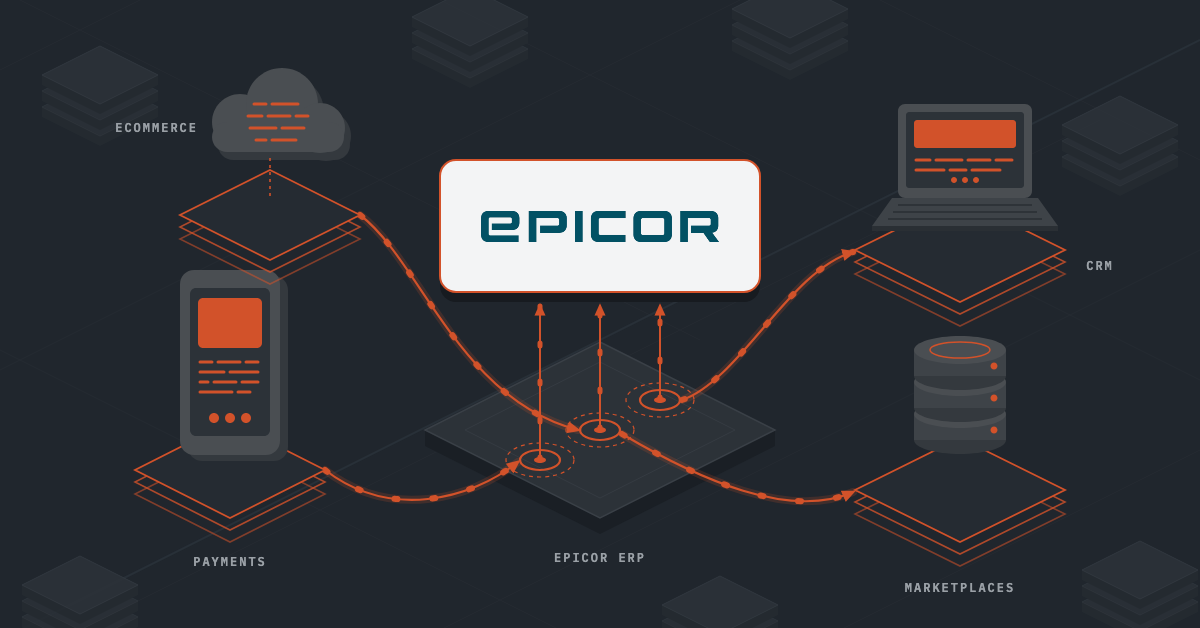
A data warehouse sits on top of the ERP and acts as the centralized analytics layer. It continuously pulls data from the ERP, structures it properly, stores historical records, and makes large-scale reporting easier.
So instead of only looking at operational data, businesses can now analyze historical data, branch-wise performance, profitability patterns, inventory movement over time and cross-department insights
The warehouse does not replace the ERP. It simply makes the ERP data more usable for decision-making. For smaller and growing businesses, a data mart can often act as a simpler alternative to a full data warehouse. So instead of building a large centralized warehouse, they create a focused analytics layer directly connected to the ERP.
As the business grows, more systems, branches, teams, and reporting needs get added. That’s usually when businesses move toward a larger data warehouse architecture.
Also read: Understanding The Data Integration Process [Methods & Steps]
Top Tool To Integrate For A Seamless Data Strategy: DCKAP Integrator
Now that we’ve covered how an ERP-first data strategy helps connect your ERP, reporting systems, data marts, and data warehouses more effectively, the next question is: how do you actually make this work in practice?
Try DCKAP Integrator. The platform helps distributors and manufacturers seamlessly connect their ERP with analytics and reporting layers without disrupting existing operations.
Whether you’re starting with a focused data mart for better visibility or building toward a larger data warehouse setup, DCKAP Integrator helps centralize and structure your ERP data in a way that makes reporting cleaner, faster, and easier to scale as the business grows. Instead of creating disconnected systems, it helps businesses build a more connected and reliable data ecosystem around the ERP they already rely on.
If you want to explore how this approach can help streamline your data strategy and improve business visibility, get in touch with us.
FAQs
What is the difference between a Data Mart and a Data Warehouse, and which is the best option for faster decision-making across different business units?
A Data Warehouse is a centralized system that stores Business Data from various sources across the entire company. It provides a comprehensive view for enterprise-wide analysis and Business Intelligence. A Data Mart is a smaller subset of a Data Warehouse designed for specific departments or business units like sales, finance, or Human Resources. For faster decision-making in one department, a Data Mart may be the best option. For organization-wide visibility and consistency, a centralized data warehouse is more effective.
What are the advantages of independent data marts compared to a centralized data warehouse for specific business functions?
Independent data marts are easier and faster to implement because they focus on limited scope reporting for one department or business function. They provide end-users with quick access to specific data needed for analysis without the complexity of managing an Enterprise Data Warehouse.
How does a centralized data warehouse help businesses collect and process data from various sources for better Business Intelligence and Data Analytics?
A centralized data warehouse gathers relevant data from different sources such as ERP systems, CRM platforms, relational databases, spreadsheets, and cloud applications. It organizes and stores data in a structured format, making analytical processing easier. This allows business users to perform Data Analytics, create dashboards, and generate insights that improve business decisions and Business Processes.
What role do cloud data warehouses play in storing and analyzing big data from different sources in real-time?
Cloud data warehouses help organizations store data from various sources in scalable cloud environments. They support real-time data processing, analytical processing, and large-scale Data Analytics for big data environments. Businesses use them to improve faster decision-making, increase flexibility, and reduce infrastructure costs.
What are the key differences between a relational database, a Data Lake, and a centralized data warehouse in terms of Data Storage and analytical processing?
A relational database is designed for operational transactions and structured data storage. A Data Lake stores large volumes of raw data and supports multiple data types, including structured and unstructured information. A centralized data warehouse focuses on cleaned, structured Business Data optimized for analytical processing, reporting, and Business Intelligence.
How can a sales team benefit from a Data Mart that provides a comprehensive view of customer, inventory, and sales data?
A sales team can use a Data Mart to access relevant data like regional sales performance, inventory availability, customer buying patterns, and revenue trends. This improves faster decision-making and helps sales department to respond quickly to market changes.
Why do growing organizations move from limited scope reporting systems to Enterprise Data Warehouse solutions?
As businesses grow, they generate more data from different sources and departments. Limited scope systems become difficult to manage and often create inconsistent reporting. Enterprise Data Warehouse solutions help centralize data, improve consistency, and support enterprise-wide analysis.
What challenges do business users face when process data comes from different sources without a centralized repository?
Without a centralized repository, business users often deal with inconsistent reports, duplicate information, delayed analysis, and poor visibility across business functions. This affects the decision-making process and reduces operational efficiency.