If you feel like your back-office and your digital storefront are speaking two different languages, you’re likely facing a data silo problem. To bridge this gap, you need a dedicated integration tool that ensures your data flows smoothly in real-time.
Two top-tier brands that address this from different angles are DCKAP and Clarity Ventures. While DCKAP focuses on a user-friendly, ERP-first experience for B2B businesses, Clarity Ventures provides a deeply customizable framework for more complex or regulated industries. To better understand these tools, check the detailed comparison below.
DCKAP Vs. Clarity Ventures: Quick Comparison
| Aspect | DCKAP | Clarity Ventures |
| Overview | A software company providing a specialized ERP-First Integration Tool, DCKAP Integrator, with managed services | A full-service development agency that uses its own tool, Clarity Connect to build custom sites. |
| Industry Focus | Distribution & Manufacturing, specialized for Warehouse to Webstore. | Enterprise & Regulated, broad focus, including Medical (HIPAA) and Auctions. |
| Approach | ERP-first integration approach (ERP is the central hub) | Custom-built solutions tailored to each business |
| User Interface | Low-code, visual drag and drop mapping and dashboard | Pro-code, built in C#; allows developers to extend via Visual Studio. |
| Ideal Use Case | Fixing disconnected systems and automating data across tools | Building a powerful, custom eCommerce ecosystem from scratch |
| Implementation | Streamlined and repeatable; follows a proven product implementation roadmap. | Deeply consultative; the integration is often one piece of a larger custom software project. |
| Customization | High (configurable workflows, but within platform structure) | Very high (fully custom development) |
| Pricing | Completely customized pricing based on the number of systems, workflows, users, and integration complexity. | Flexible/Project, mix of SaaS (OPEX) and one-time (CAPEX) payments. |
Also read: EDI vs APIs in B2B Supply Chain Integrations
DCKAP Vs. Clarity Ventures: Features, Pros and Cons
Here’s everything you need to know about the tools:
DCKAP Integrator: Product Overview
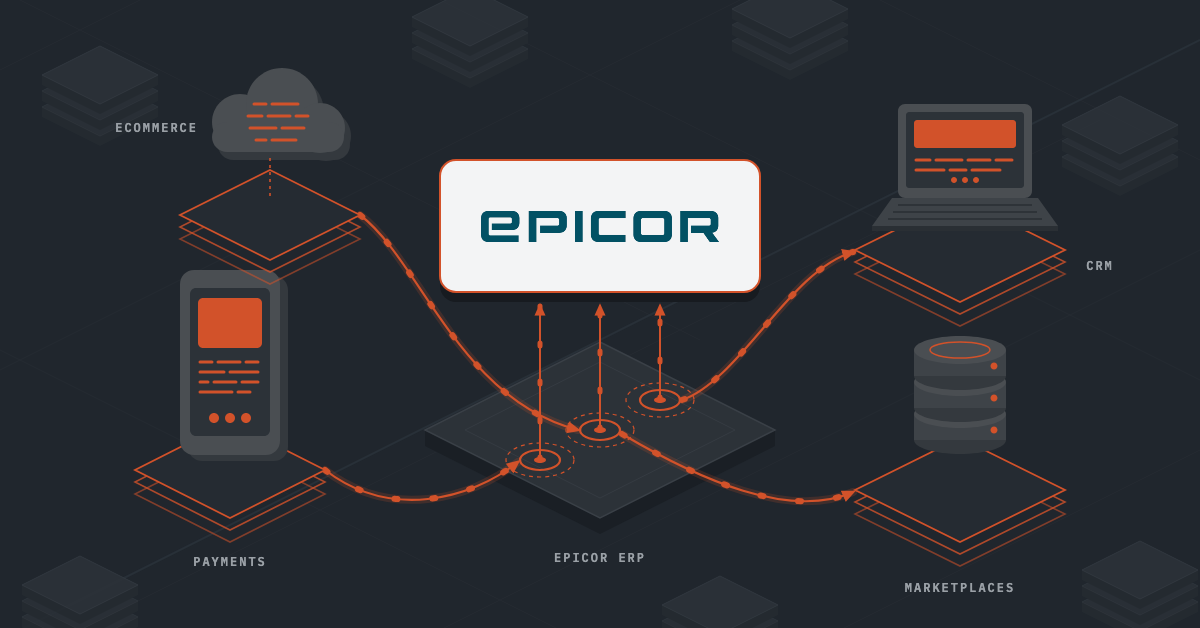
DCKAP Integrator is a cloud-based integration platform that connects all your business systems but with a key difference: it follows an ERP-first approach. This means your ERP becomes the central hub (single source of truth) for all business data like products, inventory, pricing, customers, and orders. Instead of different systems talking to each other randomly, everything connects through the ERP. This ensures that every system always uses the same accurate and up-to-date data.
Best For
- Distributors and manufacturers
- Mid-sized to large businesses using ERP systems
- Companies managing multiple tools (eCommerce, CRM, logistics, etc.)
- Businesses wanting to automate operations and reduce manual work
- It’s especially useful for companies dealing with high data volume and complex workflows.
Key Features
- System Integration: Connects ERP, CRM, eCommerce, and more
- Real-Time Data Sync: Keeps inventory, orders, and customer data updated
- EDI Support: Handles large-scale business transactions automatically
- Custom Workflows: Tailors processes to match business needs
- Centralized Data: Keeps everything aligned with ERP as the main system
- Automation Tools: Reduces manual effort and errors
- Monitoring & Alerts: Tracks data flow and catches issues early
Strengths
- Automation of data flow, eliminates repetitive manual tasks
- Real-time synchronization, keeps data updated across systems
- ERP-centered approach ensures consistent and reliable data
- Highly customizable, can adapt to different workflows and industries
- Scalable, can handle multiple systems as the business grows
- The DCKAP team handles setup, maintenance, and support
- It also helps companies save time, reduce errors, and improve decision-making by keeping accurate data across departments.
Limitations
- Implementation may take time depending on complexity
- Limited library of pre-built connectors
Clarity Ventures: Product Overview
Clarity Ventures is a technology consulting and development company that helps businesses build powerful and customized eCommerce platforms. Their main focus is on creating solutions for both B2B (business-to-business) and B2C (business-to-consumer) companies that need more than just a basic online store.
Instead of offering one-size-fits-all products, Clarity Ventures designs systems tailored to each client’s needs. They also specialize in connecting various business tools such as ERP and CRM through their Clarity Connect tool so that everything works together smoothly.
Best For
- Medium to large businesses with complex requirements
- Companies that need deep integration between systems
- Organizations in regulated industries (like healthcare)
- Businesses looking for long-term technical support and partnership
- It is less ideal for small businesses or startups that need simple, low-cost solutions.
Key Features
- Custom eCommerce Platforms: Built specifically for your business needs
- Clarity Connect: Connects your internal systems so they work together
- Payment Hub: Handles secure payments across different gateways
- HIPAA Compliance: Ensures data security for healthcare-related businesses
- Marketplace & Auction Tools: Enables advanced selling models
- End-to-End Services: From design to development to ongoing support
Strengths
One of the biggest strengths of Clarity Ventures is their customization and flexibility. They don’t force businesses to adapt to software, instead, they build software around business needs. Other advantages include:
- Strong expertise in handling complex B2B systems
- Scalable solutions that grow with the business
- Dedicated project management and support
- Deep industry experience across their team
- Focus on security and compliance
- Clients also appreciate their hands-on approach, including training and ongoing support after the project is completed.
Limitations
While powerful, Clarity Ventures does come with some challenges:
- Complex implementations. Their solutions may require time and planning, especially for integrations
- Fewer case studies make it harder to compare performance at scale
- Not beginner-friendly, smaller businesses may find the solutions too advanced or expensive
Also read: DCKAP vs. Tray.ai: Which Is The Right Tool For You?
The Overlap and Key Differences
The Overlap:
At their core, both companies are in the business of solving the data silo problem. They both act as the essential bridge between your back-office ERP and your customer-facing digital platforms.
Whether you choose DCKAP or Clarity, you are getting a middleware solution that provides bi-directional syncing, meaning orders flow in while inventory and pricing flow out. Additionally, they both use transaction logging to act as a flight recorder for your business. Every time an order is placed, a price is changed, or inventory is updated, the system creates a permanent log of that event. If your ERP or your website goes offline, these logs ensure that no data simply disappears.
Key Differences:
Business Models
The most significant difference lies in their business models. DCKAP is primarily a product-led company. When you work with them, you are getting DCKAP Integrator, a cloud-native platform that is ready to go with pre-built pipes for the distribution industry.
In contrast, Clarity Ventures operates as a full-service custom development agency. For them, the integration tool (Clarity Connect) is just one part of a larger, bespoke project where they act as your outsourced engineering department, building everything from the ground up.
Industry Specialization
DCKAP has built its entire identity around the distribution and manufacturing sectors. They already understand the specific headaches of a warehouse like complex unit-of-measure conversions and branch-specific pricing and have built those solutions into their product logic.
Clarity Ventures, however, is industry-agnostic. They are the architects you call when you have a highly unique or regulated business model, such as a HIPAA-compliant medical portal or a custom global auction site, that requires a completely one-of-a-kind digital fortress.
Ownership
There is also a major difference in who manages the tool day-to-day. DCKAP Integrator is designed as a low-code solution with a visual dashboard, meaning your internal operations or marketing team can see the data logs and manage mapping without needing a computer science degree.
Clarity Connect is a pro-code environment built on .NET and C#. It is designed for developers who want to get under the hood and write custom code to handle highly non-standard data protocols.
The Approach to Customization
Finally, they handle custom requests very differently. Because DCKAP is a full-service integration company, they provide managed customization. If you have a unique business rule, they don’t rewrite the whole software; they tune the API pipes specifically for you, making it a fast and repeatable process.
Clarity Ventures handles customization through bespoke engineering. Since they are an agency, they build the entire solution from the website front-end to the backend logic, specifically for your brand, which offers limitless flexibility but typically requires a longer timeline to build.
Also read: How To Automate Your Sales Order Entry Process
Final Words
Both these tools are designed to solve the same headache: getting your systems to finally talk to each other so you can stop doing manual data entry. But the best one really depends on what kind of business you’re running.
- Go with Clarity Ventures if you are building something totally from scratch. If your business model is brand new, or you need a highly secure, one-of-a-kind portal (like for healthcare or complex auctions), you want an agency that acts as your outsourced dev team. They’ll build you a custom digital stack, though it will take a bit more time and technical heavy lifting to get it live.
- Go with DCKAP if you are a distributor who wants a specialized ERP-first engine. If you need someone who already understands things like warehouse logic and branch pricing and you want a product that your own team can actually use, this is your best bet. You get a solid, fast-moving platform, but you also get the benefit of amazing API customizations whenever your business rules get a little unique.
So, if you’re interested in seeing how DCKAP Integrator can simplify your life, book a free consultation here.
FAQs
What should I look for when choosing an integration platform?
Look for:
- Ease of use
- ERP compatibility
- Scalability
- Security
- Support and service
- Pre-built connectors
How long does a typical integration project take?
It depends on your path. If you choose a Product-led path (DCKAP), it can take anywhere from 3 to 12 weeks because they use pre-built pipes for systems like Infor or Epicor. If you choose a Bespoke Agency path (Clarity), it can take several months because they are building a custom-coded architecture from the ground up specifically for you.
How does an ERP-first integration approach work?
In an ERP-first approach, your ERP becomes the main system where all data lives. All other systems (like Shopify, Salesforce, etc.) connect to the ERP, and data is created/updated in the ERP then shared with other systems. This ensures consistent and accurate data everywhere.
What systems can be connected using an integration platform?
Most platforms can connect:
- ERP systems
- eCommerce platforms
- CRM tools
- Payment gateways
- Inventory & warehouse systems
- Shipping/logistics tools
- Marketplaces
Do I need a full-time developer to manage this?
Not with a low-code tool. One of the biggest benefits of a tool like DCKAP Integrator is that it has a visual dashboard. Your operations or marketing manager can see the transaction logs and check for errors without needing to write a single line of code. If you go with a pro-code tool like Clarity Connect, you will likely need a developer on hand to manage the C# or .NET scripts.