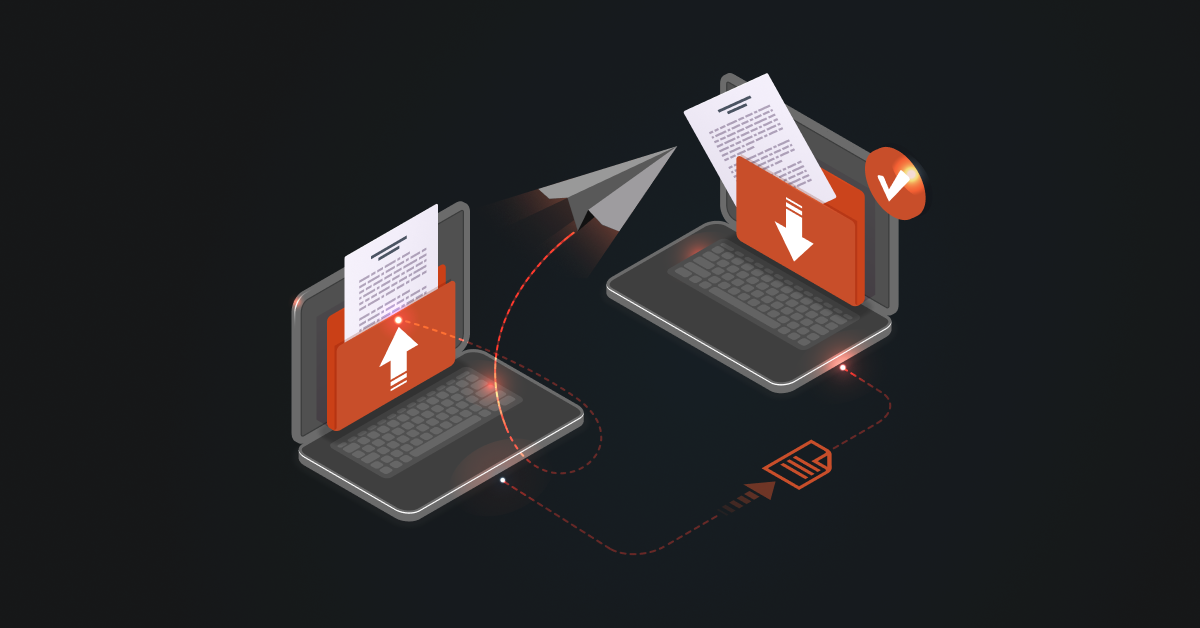
Electronic data interchange (EDI) automates business transactions between trading partners through the exchange of documents. Manufacturers, distributors, retailers, and 3PLs count on EDI to keep products and materials moving among partners.
This guide will walk you through EDI processes and systems for businesses that take part in the supply chain. You’ll also learn about the EDI software best suited for these companies and how to implement it.
How Does EDI Work?
EDI works by translating digital documents into a universally understood format and sending the resulting data to a business partner. Once the data reaches the business partner, their EDI system and integrations incorporate the data into their systems. From there, the business partner sends an acknowledgement of receipt and begins working on the document, such as paying an invoice.
The above process works on multiple levels of electronic communication, document formatting, and data mapping. Let’s go through the main components of an EDI system and how they work in action.
EDI Standards
Document exchanges in EDI use standards to determine codes, syntaxes, identification values, and message designs. All of these components control the type of data in the document and its formatting. Three of the most common publicly used EDI standards include:
- ANSI X12: A flexible standard that can read data from a variety of industries, mainly used in North America. It is one of the most popular standards in the United States and Canada.
- EDIFACT: An international standard frequently used outside of North America in United Nations organizations. Outside of UN organizations, a variety of for-profit businesses in UN-affiliated countries also use it.
- TRADACOMS: A United Kingdom standard mainly used in retail. It mainly appears in legacy EDI systems.
Some companies or industries have proprietary standards, which are specific to the creator. Creators use markup languages like XML to create custom solutions. When working with a business partner who has a private standard like this, you’ll need EDI software that can read custom formats, like DCKAP EDI.
Protocols for EDI
EDI also communicates through secure internet protocols that send data between partners. While the standards above define document data, protocols define how two systems exchange data. Here are some of the most common EDI protocols:
- AS2: A protocol specifically created for business-to-business document exchange. It is one of the most commonly used and secure protocols.
- SFTP/FTP: A common protocol that may also need a virtual private network (VPN) or value-added network (VAN). It has less security than other protocols, but many businesses still use it.
- API: A flexible, but also less standardized, protocol. In exchange for a higher level of customization, APIs also have the potential to disrupt transactions when they fail.
Methods of EDI Integration
While considering the above two factors in mind, there are three ways to integrate EDI into a business:
- Direct integration: Connecting EDI directly to your internal systems through a protocol. There is no service or software serving as a go-between.
- Indirect integration: Using a VAN, managed service provider, or integration service provider to manage multiple standards and protocols for you. These solutions act as a go-between to streamline EDI communications.
- Hybrid integration: Using a combination of direct and indirect integrations, depending on each business partner’s needs. Some partners may use standards not compatible with one available option, requiring a different method of communication.
Documents Exchanged Through EDI
EDI uses transaction codes based on paper-based documents to classify electronic documents. Some of the most important ANSI X12 in businesses connected to the supply chain include:
- Purchase orders (EDI 850): Places an order from your organization to a vendor. In automations, EDI 850s can initiate a purchase of supplies or products.
- Advanced ship notices (EDI 856): Informs a recipient of the shipment of an item. You can integrate EDI 856s into the shipping process to automate shipping notifications.
- Invoice (EDI 810): Bills the recipient for goods or services. Automated EDI 810s enable you to make billing faster.
- Functional acknowledgement (EDI 997): Acknowledges receipt of an EDI document. Many businesses that use EDI expect a 997 or similar document of acknowledgement in response to transactions.
EDI Transactions Step-by-Step
Bringing all of the above together, let’s examine what an EDI transaction involving a purchase order looks like broken down:
Step 1: Document Creation
The sender creates a purchase order in their EDI software that the system formats into an ANSI X12 EDI 850 document. This step can trigger as part of an automation or manual creation in the EDI system.
Step 2: Data Transmission
The sender’s EDI software sends the EDI 850 document over a secure AS2 protocol to the recipient’s EDI system. This transmission can happen directly between the systems or using a separate service as a go-between.
Step 3: Translation and Mapping
The recipient’s EDI software translates the EDI 850 purchase order into data that the recipient’s internal systems can read. Then, it maps the data according to internal rules so other systems can process it.
Step 4: Integration
The data may also flow to other software like enterprise resource planning (ERP) or warehouse management system (WMS) software through an EDI integration. Different automations allow this step to update data or trigger actions in other systems.
Step 5: Acknowledgement and response
The recipient sends a purchase order acknowledgement coded EDI 855 to let the sender know they received the purchase order. They may put checks in place to ensure that relevant systems can confirm inventory levels before sending the EDI 855.
Step 6: Further communications and automations
From here, both sides of the transaction can use EDI for further communication. These future transactions could include advance shipment notices, invoices, and remittance advice documents. Many businesses use integrations to automate these steps, saving time on manual entry.
Common EDI Implementation Challenges (+Solutions)
Due to the various standards and data sources involved in EDI implementation, challenges related to inconsistencies between the two can come up. Here are some common issues that can happen during EDI implementation and their solutions.
Improper Data Mapping and Transformation
Challenge: Despite following directions to clean and map data, you still face data errors. The incorrect information appears in your transactions or the transactions fail.
Solution: In addition to careful cleaning and testing, hiring an outside consultant can help you avoid issues with data mapping and transformation.
Differences in Vendor Standards and Processes
Challenge: As much as you can try to optimize your processes, issues can occur on your business partner’s end. For example, some EDI users find difficulty receiving acknowledgement documents like EDI 997s.
Solution: Stay in close communication with your business partners and adjust your own processes as needed. In a situation where you don’t receive 997s, for instance, you can modify your automations to assume you won’t get one from that partner in particular.
Discrepancies in Master Data
Challenge: Your master data – data that defines your contact information, products, or prices – changes, causing issues with EDI communications. Or, a partner changes their master data without informing you. Any discrepancy in master data will cause every document sent to fail until you update it.
Solution: Know who is responsible for you and your partners’ master data. Maintain accurate documentation about your master data to readily share with your partners. And set notifications to alert you immediately when issues with master data happen.
DCKAP EDI for Distributors, Manufacturers, Retailers, and 3PLs
For distributors, manufacturers, retailers, and 3PLs, the best EDI management solution is often an outsourced, ERP-native provider. These platforms can handle the multiple standards and protocols involved in business partnerships. Additionally, the ERP focus of these providers allows the data elements from EDI transactions to flow to their ERP – their main source of truth.
DCKAP EDI meets both of these requirements, making it an ideal solution for businesses that work within the supply chain. Let’s look at the top features that make it suitable for these users:
- Compatibility with multiple standards and protocols: DCKAP EDI can handle the most common EDI standards, including custom formats from business partners. It also supports popular protocols like AS2, API, and FTP. This compatibility makes it easy to work with business partners with different communications.
- Integrations with your preferred tools: Built-in integrations with ERP, WMS, and TMS software enable you to connect EDI transactions to your most important data sources. DCKAP EDI also has API support to connect the other software in your stack.
- Intuitive interface: DCKAP EDI allows for simple mapping and integration setup from your IT experts. Once you complete installation, the tool has an easy-to-use interface suitable for non-technical employees.
In other words, DCKAP EDI brings together your EDI communications, business systems, and integrations into one simple-to-understand platform. Save time moving between apps by letting its automations handle everything in the background.
DCKAP EDI truly shines when you can see it in action. Book a free consultation to talk to an integration engineer and watch a demo.
Frequently Asked Questions
What is electronic data interchange (EDI)?
Electronic data interchange (EDI) is the automated exchange of business documents between computers. It involves sending traditionally paper-based documents like invoices and purchase orders electronically for more efficient business processes.
What is an EDI system?
An EDI system is an application that manages electronic business document transactions. It translates different data formats to enable different systems to read standardized documents.
What is the difference between EDI and API?
While EDI manages document exchange between systems, APIs connect and automate data and technology. They can be used together, but they serve very distinct purposes.
What are the best EDI integration tools?
The best EDI integration tool will depend on your particular needs, but popular options include DCKAP EDI, SPS Commerce, and TrueCommerce. DCKAP EDI works especially well for manufacturers, distributors, retailers, and 3PLs because of its ERP-native functionality.
What are the main types of EDI integrations?
There are six types of EDI integrations:
- Direct EDI: Uses a secure internet protocol like FTP or AS2 to directly transmit documents without an in-between app.
- EDI via a value-added network (VAN): Uses a third-party network called a VAN to exchange documents.
- EDI via an API: Uses pre-configured APIs to send documents over different data formats.
- Web EDI: Uses a web-based app as a go-between between two systems exchanging documents.
- Mobile EDI: Uses a mobile app as a go-between between two systems exchanging documents.
- Hybrid EDI: Combines any of the above integration methods to suit the user’s needs.
What are the main elements of EDI?
The main elements of an EDI transaction include:
- Standards: Also known as a format, standards determine the format of data in an EDI transaction. Common standards include ANSI X12, EDIFACT, and TRADACOMS.
- Protocols: Secure networks that carry EDI data between business partners. Some popular EDI protocols are AS2, SFTP/FTP, and API.
- Integration methods: You can integrate EDI into your systems in one of three ways: direct, indirect, and hybrid. While direct integration involves connecting two systems through a protocol, indirect integration uses a service as a go-between. Hybrid integration involves a mix of the previous two methods.
- Documents: Each document type in EDI has a corresponding code. In ANSI X12, some of the most frequently used codes are EDI 850 (purchase orders), EDI 856 (advanced ship notices), EDI 810 (invoices), and functional acknowledgements (EDI 997).