Tray.ai and DCKAP Integrator both come up in integration conversations, but they’re solving very different problems. Tray.ai is chasing the AI automation space and wants to be the platform where SaaS tools talk to each other and where AI agents live and operate.
DCKAP Integrator makes ERP integration work for distributors, manufacturers, and wholesalers without the usual complexity and compromises that come with general-purpose tools.
Whether either of them is right for you comes down to where your data actually lives and what goes wrong when integration breaks down.
DCKAP vs. Tray.ai: At a Glance
| Dimension | Tray.ai | DCKAP |
| Core Positioning | AI-ready iPaaS: integration, workflow automation, and AI agents on one platform. | ERP-first integration built for B2B distribution, manufacturing, and wholesale. |
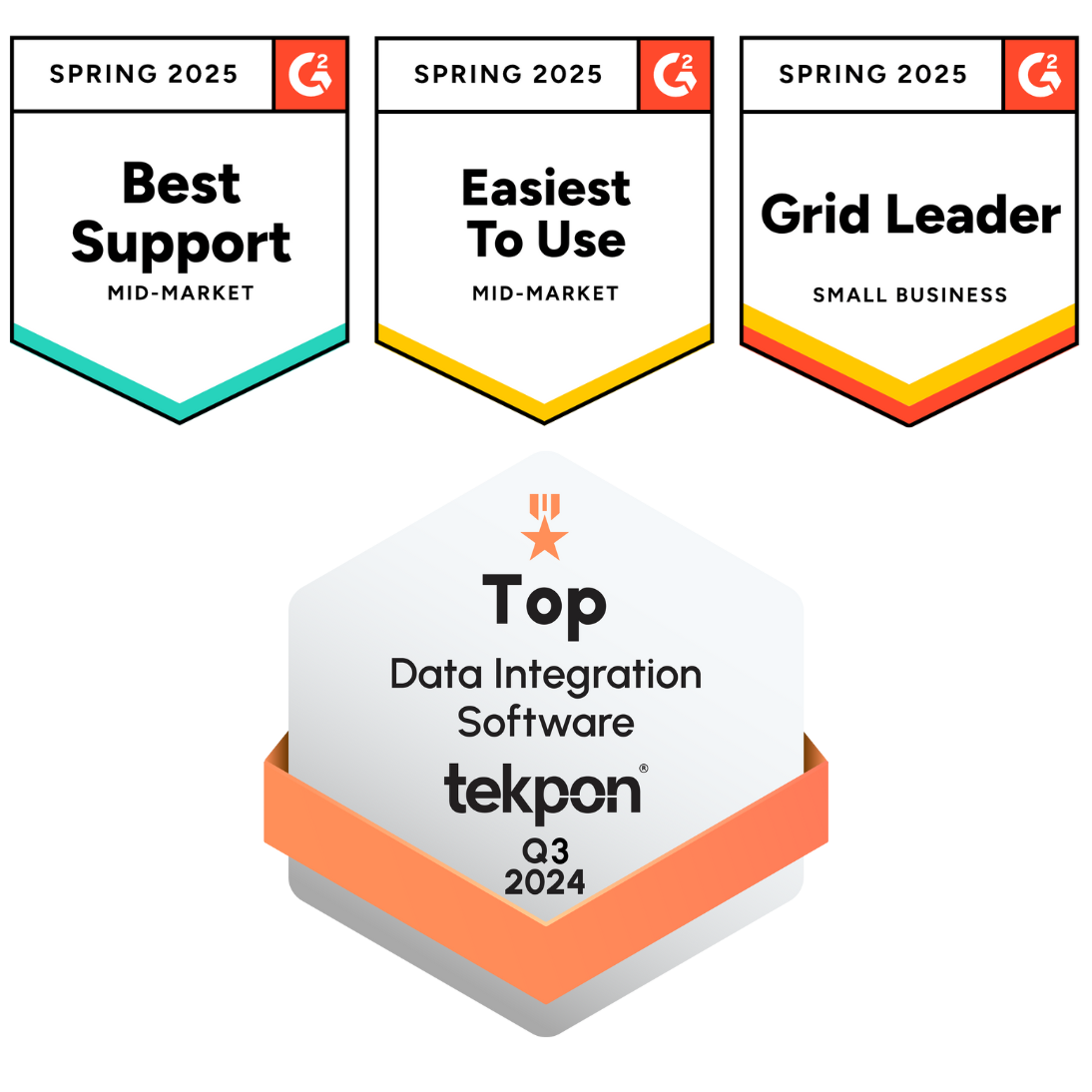
| Industry Recognition | Gartner iPaaS Magic Quadrant Visionary (2025 & 2026). Rated 4.6/5 on Gartner Peer Insights. | Rated 4.7/5 on Gartner Peer Insights, 4.7/5 on G2. G2 Spring 2025 #1 for ERP Systems, Ease of Use, and Support. |
| EDI Support | Not native — requires third-party connectors or additional configuration. | Native built-in EDI: ANSI X12, EDIFACT, TRADACOMS, AS2, FTP, SFTP. No separate EDI tool needed. |
| Data Sync | Event-driven. Works well for SaaS-to-SaaS. Volume-based costs can climb. | Bi-directional sync in real-time sync or via batch syncs |
| Pricing Model | Task-credit based. Pro: 250k credits, Team: 500k, Enterprise: 750k. Custom pricing across all tiers. | Predictable, transparent pricing: $1,250/month billed annually (Standard), $2000/month billed annually (Professional) + Custom tiers (Scale). |
| Best Fit For | SaaS-heavy teams automating across CRM, ITSM, marketing, and productivity tools; AI agent deployments. | Mid-market distributors, manufacturers, and wholesalers running ERP-centric operations. |
What Is Tray.ai?
Tray.ai spent years as a visual workflow automation tool before repositioning itself around the Universal Automation Cloud. The idea is consolidation: instead of running separate products for integration, process automation, and AI, everything sits on one platform. For teams managing a sprawling mix of SaaS tools, that is a real pitch.
The headline feature is Merlin Agent Builder, which launched in late 2024 and has received continued updates through 2025. It is designed for teams that want AI agents in production, not just pilots.
Agents hold memory across sessions, pull from enterprise data sources, and deploy across Slack, web apps, and APIs from a single build.
Teams can choose between LLMs from OpenAI, Google Gemini, Amazon Bedrock, and Azure, depending on the task. That multi-LLM flexibility is something most platforms have not figured out yet.
Best fit:
RevOps, IT operations, marketing, and customer support teams that need to link SaaS tools, automate their stack, and build AI-driven workflows.
What Is DCKAP?
DCKAP Integrator is an ERP-first tool built around how distribution and manufacturing businesses actually operate. The product does not try to be a general-purpose platform, and it owns that position without apology.
The team and platform have expertise integrating leading systems including SAP, NetSuite, Microsoft Dynamics 365, Acumatica, Epicor Eclipse, Epicor P21, Distribution One, and DDI Inform on the ERP side, with Shopify, Magento, BigCommerce, and Salesforce Commerce Cloud on eCommerce.
What sets DCKAP apart from generic API connections is the built-in domain logic covering customer pricing tiers, multi-line order handling, and multi-warehouse inventory.
For distributors and manufacturers, EDI is a core business requirement. DCKAP handles ANSI X12, EDIFACT, and TRADACOMS natively, along with AS2, FTP, and SFTP. No separate EDI translation vendor is needed, since everything is managed within the same platform.
Bi-directional real-time sync with no volume caps covers orders, inventory, product data, customer pricing, and invoices. Failed transactions surface immediately, automated alerts fire, and exception workflows route issues to the right people.
DCKAP also operates a managed integration model, where specialists work alongside customers through design, implementation, and ongoing adjustments. For mid-market businesses without a dedicated integration team, this changes the risk profile of the entire project considerably.
Best fit:
Distributors and manufacturers that need ERP-centric integration, native EDI support, and hands-on implementation help.
Conclusion
These two platforms aren’t competing for the same customer. This makes the choice simpler than many software comparisons.
Tray.ai is the stronger choice if your stack is SaaS-heavy and AI agents are part of your actual roadmap. Merlin Agent Builder is ahead of most competitors on genuine AI deployment, and 600+ connectors mean you’ll rarely hit a dead end. Teams in RevOps, marketing ops, or IT that need to automate across many tools will find plenty to work with.
DCKAP Integrator is the stronger choice when your ERP is where the critical data lives and when getting that data wrong has real consequences like a missed order, an inventory count that doesn’t match what’s actually in the warehouse, or an EDI document that never reached a trading partner. It’s not trying to be everything. It’s focused on making ERP integration reliable for the businesses that depend on it, and the consistent ratings from buyers in those industries suggest it’s doing that.
Thinking about DCKAP Integrator for your ERP environment? Talk to our integration experts to see which is the right match for you.
FAQs
What’s the core difference between these two platforms?
Tray.ai is broad, built for SaaS automation and AI agents across many tool types. DCKAP Integrator is deep, built specifically for ERP integration in B2B distribution and manufacturing, with native EDI and pre-built domain logic. They serve different buyers and different use cases, so in most real purchasing situations, they’re not actually competing.
Does DCKAP have native EDI management features?
Yes, and it’s built directly into the platform, not a third-party add-on. ANSI X12, EDIFACT, and TRADACOMS are all supported, along with AS2, FTP, and SFTP protocols.
Which one is better for distribution and manufacturing?
DCKAP, without much debate. It was built with those workflows in mind from the beginning. It has ERP connectors that use real B2B logic. It also has built-in EDI, multi-warehouse inventory management, and customized pricing for customers. Tray.ai can connect to ERP systems, but it lacks specific features right away.
Can Tray.ai handle ERP integrations?
It can connect, but it wasn’t built around ERP workflows. Things like tiered pricing, backorder management, and multi-warehouse inventory may require custom configuration. If ERP integration is a secondary use case, Tray.ai might be fine. If it’s the core reason you’re buying an integration platform, you’ll end up doing a lot of work that DCKAP does natively.
Do I need an internal technical team to use either platform?
Tray.ai is designed for self-service. Business users in marketing, RevOps, or IT can handle most workflows on their own, without needing a developer.
DCKAP has a managed model option. Integration specialists can work on design and implementation with your team. If you don’t have integration skills in-house, DCKAP can handle set up, customization, upgrades and maintenance.