Searching for the right EDI tool usually boils down to two things: your current ERP stack and your fulfillment model. While both Celigo EDI and DCKAP EDI cover standard B2B document compliance, Celigo is engineered for omnichannel commerce on cloud ERPs, while DCKAP is tailored for wholesale distribution pipelines.
Celigo EDI Vs DCKAP EDI : Key Differences at a Glance
| Features | Celigo EDI | DCKAP EDI |
| Service Model | A self-service B2B EDI platform that gives businesses tools to manage their own EDI workflows. | A managed EDI solution for businesses that want one partner to handle EDI and integrations. |
| Architecture | Runs within Celigo’s cloud iPaaS, allowing businesses to manage EDI and API integrations on a single platform. | A dedicated EDI product from DCKAP. Businesses can also use DCKAP Integrator for custom API integrations, giving them one partner for both EDI and other integration needs. |
| Trading Partner Onboarding | Provides tools to configure trading partner requirements and map EDI documents. | The DCKAP team manages trading partner onboarding, document mapping, and partner-specific requirements. |
| Error Management | Provides a visual dashboard for reviewing integration errors and retrying failed orders. | Provides detailed execution logs, monitoring, and email alerts to help teams identify and resolve integration issues. |
| ERP Focus | Supports cloud ERP systems such as NetSuite, SAP S/4HANA, and Microsoft Dynamics 365. | Supports distribution and industrial ERPs, including Epicor Prophet 21, Distribution One, NetSuite, SAP, Sage, Acumatica, and Microsoft Dynamics. |
| Best Suited For | Businesses that prefer to manage their own EDI workflows for omnichannel commerce, retail compliance, and marketplace orders. | Distributors and manufacturers looking for a hassle-free, managed approach to EDI and API integrations across their ERP systems, suppliers, customers, and trading partners. |
| Pricing | Charges based on the number of connected applications and integration workflows. | DCKAP structures its pricing dynamically based on the complexity of the company’s ERP, the volume of data points, and specific custom business requirements. |
Celigo EDI Vs DCKAP EDI: Features, Pros and Cons
Celigo EDI: Overview
Celigo offers a cloud-based EDI solution through B2B Manager, which is part of its core iPaaS platform, integrator.io. It brings EDI and API integrations together, allowing businesses to connect trading partners such as retailers, suppliers, 3PL providers, and marketplaces with systems like ERP, CRM, and warehouse management software.
Rather than managing EDI separately, organizations can handle B2B transactions and other integrations within the same platform.
Key Features
- AI-Assisted Trading Partner Onboarding: Uses AI to analyze sample EDI files and help create mappings and validation rules, reducing manual setup.
- Preconfigured Trading Partner Profiles: Offers preconfigured integrations for supported retailers and logistics providers to simplify partner compliance.
- Self-Service B2B Dashboard: Provides transaction visibility, error alerts, and integration monitoring for business and IT teams.
- Error Management and Validation: Helps users identify transaction errors, correct issues, and retry failed transactions.
Pros
- Unified Platform: Manage EDI and API integrations in one place.
- Flexible Integrations: Supports multiple EDI standards and communication protocols.
- Self-Service Management: Lets teams monitor transactions and troubleshoot errors.
- Retail Compliance: Helps validate documents against trading partner requirements.
- Scalability: Supports growing integration needs.
Cons
- Internal Ownership: Requires teams to manage setup, testing, and maintenance.
- Learning Curve: Workflow configuration and error handling may require technical knowledge.
- On-Premise Connectivity: Legacy ERP integrations may need additional setup.
- Custom Configuration: Specific trading partner requirements may require extra mapping and validation.
Also read: EDI vs APIs in B2B Supply Chain Integrations
DCKAP EDI: Overview
DCKAP EDI operates as a specialized B2B document translation engine natively integrated into DCKAP Integrator. Designed specifically with an “ERP-first” philosophy, DCKAP focuses heavily on industrial distributors, manufacturers, and B2B wholesalers.
Rather than serving as a general enterprise iPaaS, DCKAP acts as a direct bridge connecting distribution ERPs (such as Epicor Prophet 21, Epicor Eclipse, Distribution One, and Acumatica) with trading partners. It automates essential order-to-cash transactions directly at the database level, converting incoming B2B payloads into native ERP structures without requiring complex external middleware.
Key Features
- Data Mapping and Transformation: Uses field modifiers and mapping rules to handle distributor-specific data, including SKU cross-references and unit-of-measure conversions.
- EDI and API Integrations: Supports traditional EDI workflows alongside custom API integrations through DCKAP Integrator.
- Monitoring and Alerts: The team has access to transaction logs, execution details, and email alerts to identify and resolve integration issues.
Pros
- Built for Complex Distribution Workflows: Handles distributor-specific data requirements, including SKU mapping, unit-of-measure conversions, and customer-specific pricing.
- ERP-First Integration Approach: DCKAP keeps your ERP at the center of your operations and connects the rest of your tech stack to it. Even with EDI, your ERP remains the primary source of data, so you don’t have to jump between different systems to find the information you need.
- Hassle-Free, Managed EDI: The DCKAP team takes care of the entire process, from implementation and trading partner onboarding to configuration and ongoing support. You don’t have to worry about managing the technical side of EDI.
- Support for Legacy ERPs: DCKAP has years of ERP experience and understands how to work with legacy systems that businesses continue to rely on, helping connect them with trading partners and other business applications.
Cons
- Less Suited to Broad SaaS Integration: Focuses on ERP, EDI, and business system integrations rather than connecting every type of cloud application.
- Limited Self-Service: Businesses that prefer to manage EDI configurations and troubleshoot everything internally may find a managed approach less flexible.
Which EDI Tool Is Right for Your Business?
It really comes down to how you want to manage EDI and what your business needs from it. For example, if you’re selling through large retailers like Walmart or Target, meeting their EDI requirements is a big part of the job. But if you’re a distributor running an older ERP and don’t have an in-house team to manage integrations, your priorities will probably be quite different.
Both Celigo EDI and DCKAP EDI handle standard B2B data exchange. The difference is in how they approach EDI management, the systems they work with, and how much of the technical work your team needs to take on.
Choose Celigo EDI If:
You want to lean more on AI to help simplify EDI setup.
Setting up EDI for new trading partners can take time, especially when each partner has its own document formats and requirements. Celigo uses AI-assisted tools to analyze sample EDI files and help create mappings and validation rules, reducing some of the manual work involved in onboarding new partners. If you’re looking for a platform that uses AI to make EDI configuration easier for your team, Celigo is worth considering.
You want your team to manage EDI directly.
Maybe you already have an IT or operations team that handles integrations and wants more control over the process. Celigo’s self-service dashboard lets your team monitor transactions, look into errors, and manage failed workflows without depending on an external provider for every issue.
Your business runs on cloud ERPs and several connected applications.
If you’re using NetSuite, Microsoft Dynamics 365, or SAP S/4HANA alongside Shopify, marketplaces, or logistics platforms, you may want to manage all those connections in one place. Celigo brings EDI and API integrations together on its iPaaS platform, which can be useful when you’re managing multiple applications and sales channels.
Choose DCKAP EDI If:
You’re a distributor or manufacturer working with a distribution-focused ERP.
If your business runs on Epicor Prophet 21, Epicor Eclipse, Distribution One, Infor, Sage, Acumatica, or another ERP with specific distribution workflows, you’ll want an EDI solution that understands how your business operates. DCKAP works with distribution and industrial ERP systems and can tailor integrations to your requirements.
Your EDI transactions involve more than just moving data between systems.
Think about a distributor whose customers use different SKUs for the same products, or whose orders need unit-of-measure conversions and customer-specific pricing. These details need to be handled correctly before the data reaches the ERP. DCKAP EDI supports custom mapping and data transformations for these kinds of requirements.
You’d rather have someone else handle the technical work.
Not every business has an integration team that can take care of EDI setup, trading partner onboarding, mapping, and ongoing maintenance. With DCKAP, the team handles this work for you. Instead of having your employees manage the integration themselves, you have one partner to turn to when something needs to be set up, changed, or resolved.
You’re still using a legacy ERP that your business can’t simply replace.
Many distributors continue to rely on older ERP systems because they hold years of business data and support processes the company depends on. Replacing them just to make integrations easier isn’t always practical. DCKAP’s experience with distribution and legacy ERP systems helps businesses connect these systems with trading partners and other applications without having to start over.
Ultimately, think about what you want your team to be responsible for. If you have the resources to manage EDI yourself and need a platform that brings your retail, API, and cloud application integrations together, Celigo is worth considering. But if you’re a distributor or manufacturer who wants to keep your ERP at the center of operations and leave the integration work to a dedicated team, DCKAP EDI may be the more practical fit. To know more about DCKAP EDI, get in touch with us!
FAQs
What are the benefits of EDI integration for distributors and manufacturers?
Electronic Data Interchange reduces manual data entry, improves order accuracy, and helps businesses process transactions faster. For distributors and manufacturers dealing with multiple buyers and vendors, it also makes supply chain communication easier to manage as transaction volumes scale.
How do I choose the right EDI service provider for my business?
Start by looking at your ERP system, trading partner requirements, transaction volumes, and how much integration work your team can handle. Some EDI providers offer self-service platforms with tools for your internal team, while others, like DCKAP EDI, provide a managed service where the provider handles setup, trading partner onboarding, and ongoing support.
What is the difference between a self-service EDI platform and a managed EDI solution?
A self-service EDI platform gives your team the tools to configure integrations, monitor transactions, and resolve errors. A managed EDI vendor takes more of that work off your plate, with the provider handling implementation, mapping, trading partner onboarding, and ongoing maintenance. The right choice depends on your organization’s internal resources and how involved you want to be in day-to-day EDI operations.
Can EDI work with ecommerce platforms, CRM software, and other business applications?
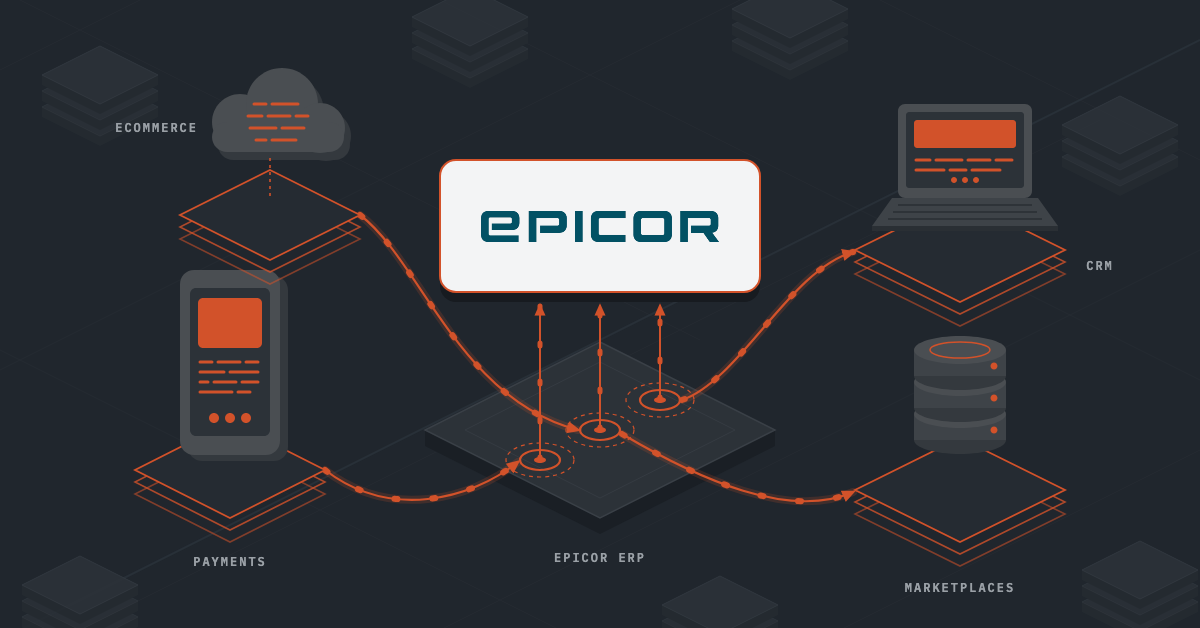
Yes. EDI can be part of a broader integration setup that connects an ERP with ecommerce platforms, CRM software, warehouse systems, and logistics applications. For example, an order received through an ecommerce platform can flow into the ERP, while order confirmations, invoices, and shipping details are exchanged with the relevant trading partners.
What are the best practices for a successful EDI integration?
Start by identifying your trading partners’ document requirements and confirming that your ERP can support the required data flows. Map fields carefully, test purchase orders and invoices before going live, monitor transaction errors, and establish a clear process for handling exceptions. Working with an experienced EDI provider can also simplify onboarding and ongoing maintenance.
Are AI-powered EDI platforms worth considering?
AI-assisted features can help reduce the manual work involved in analyzing sample EDI files, creating mappings, and configuring trading partner requirements. However, AI does not eliminate the need for testing, validation, or ongoing monitoring. Businesses should evaluate whether these capabilities address their actual integration challenges rather than choosing a platform based on AI features alone.