Is your Avalara setup accidentally charging tax to your best customers?
Nothing kills a major wholesale deal faster than an exempt buyer seeing a massive sales tax line added to their digital shopping cart.
If your customer database and Avalara exemption records aren’t perfectly synced at checkout, you are actively driving buyers to abandon their carts. Here is how to integrate your systems to deliver the seamless, checkout experience your best clients expect.
Methods Of Avalara Integration
Here are three primary ways to go about it:
Pre-Built Connectors
This is the simplest and fastest way to integrate Avalara. If you use popular business systems like NetSuite, Microsoft Dynamics 365, BigCommerce, or Salesforce, Avalara likely already has a certified connector for them.
You simply install the connector, connect it to your Avalara account, and configure a few settings such as product tax codes and tax-exempt customers. Since most of the integration is already built, there is very little custom development involved. This method works best for businesses using standard software with minimal customization.
Custom API Integration
A custom API integration is designed for businesses with proprietary software, heavily customized ERP systems, or unique business processes that cannot use pre-built connectors.
In this approach, developers build the integration directly with Avalara’s APIs. This gives complete control over how tax calculations, address validation, exemption certificates, and other tax functions are handled. Although it requires more development effort and ongoing maintenance, it offers the flexibility needed for highly customized environments.
Middleware or iPaaS Integration
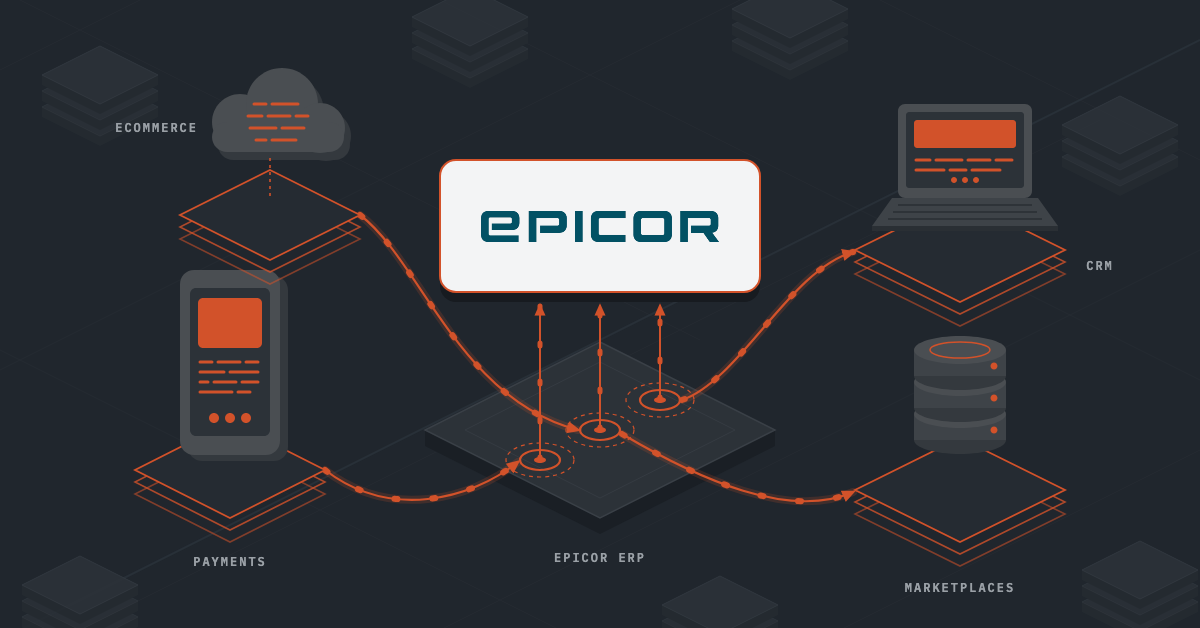
If your business relies on multiple systems that need to work together, middleware is usually the better option. Instead of connecting Avalara separately to your ERP, ecommerce platform, CRM, and other applications, you connect everything through a single integration platform.
The middleware receives data from your systems, converts it into the format Avalara expects, sends it for tax calculation, and returns the correct tax information to the right application. It can also apply business rules and keep data synchronized across multiple systems. This approach is ideal for manufacturers and distributors with complex B2B operations and multiple business applications.
Also read: On Premise vs Cloud: Tools, ERPs and Integration Decoded
Key Pillars of Avalara Integration
At its core, an Avalara integration answers three important questions before calculating sales tax: Who is buying? Where are they buying from? And what are they buying? Based on these three details, the integration sends the information to Avalara, retrieves the correct tax calculation, and updates your business system in real time.
1. The “Who”: Handling Tax-Exempt Customers
Many B2B customers, such as resellers, manufacturers, government agencies, and non-profit organizations, may qualify for sales tax exemptions. Keeping track of exemption certificates manually can be time-consuming, especially when certificates expire or need to be renewed.
An Avalara integration automatically checks whether the customer has a valid exemption certificate whenever an order is placed. If a valid certificate is found, no tax is charged. If it is missing or has expired, the integration retrieves the correct tax from Avalara and applies it to the order. This helps businesses stay compliant without adding manual work for their sales team.
2. The “Where”: Calculating Tax Based on the Exact Delivery Location
Sales tax rates are often determined by more than just the state or ZIP code. They can vary between cities, counties, and even neighboring streets. An Avalara integration sends the customer’s complete shipping address to Avalara instead of relying only on the single ZIP code. Avalara identifies the correct tax jurisdiction and returns the exact tax rate for that delivery location. This helps businesses avoid overcharging, undercharging, and compliance issues.
3. The “What”: Applying the Right Tax Rules to Every Product
Different products can have different tax rules depending on the state and the type of product being sold. In some cases, services such as shipping or maintenance may also be taxed differently.
An Avalara integration maps your products to the appropriate Avalara tax categories. Whenever an order is placed, the integration sends the product information to Avalara, which applies the correct tax rules and returns the accurate tax amount. This removes the need to manually maintain tax rules for thousands of products.
In short, an Avalara integration acts as the connection between your business systems and Avalara. It identifies who the customer is, where the order is being delivered, and what is being sold, then automatically retrieves the correct sales tax and updates your ERP, ecommerce platform, or other connected system within seconds.
Also read: Understanding QuickBooks POS integration
Top Business Systems You Can Integrate with Avalara
Here are the primary systems you must consider integrating with Avalara:
ERP Systems
Your ERP is the most important system to connect with Avalara because it’s where orders become invoices and financial records are maintained. When integrated, Avalara automatically calculates the correct tax before the invoice is finalized, helping keep your financial data accurate and making tax filing much easier.
Ecommerce Platforms
Connecting Avalara to your ecommerce store lets customers see accurate taxes during checkout instead of after the order is placed. It also allows eligible customers to apply tax exemptions automatically, creating a smoother buying experience and reducing billing issues.
CRM and CPQ Systems
Sales teams often prepare quotes before an order is placed. By integrating Avalara with your Customer Relationship Management (CRM) or Configure, Price, Quote (CPQ) system, taxes are included in quotes from the beginning. This helps sales teams provide accurate pricing and prevents unexpected tax charges later in the sales process.
EDI and Order Management Systems
Many manufacturers and distributors receive orders electronically through EDI or process them using an Order Management System. Integrating Avalara ensures taxes are calculated automatically as these orders move through your workflow, reducing manual work and helping every order use the correct tax rules.
POS Systems
If you also sell through physical branches or trade counters, connecting your POS system to Avalara ensures taxes are calculated based on the customer’s location at the time of purchase. This keeps in-store transactions just as accurate as online orders.
Subscription and Recurring Billing Platforms
If your business charges customers on a recurring basis, such as for service contracts or subscription products, Avalara can calculate the latest tax every time a payment is generated. This ensures recurring invoices always use the current tax rates without requiring manual updates.
Also read: Product Data Sync: Everything You Need To Know
Things to Consider Before Integrating Avalara
An Avalara integration is much easier to implement when you’ve prepared your business systems and tax data in advance. Spending a little time planning can help you avoid delays, unexpected costs, and compliance issues later. Here are some of the most important things to review before you begin.
1. Understand Where You Need to Collect Sales Tax
Before setting up Avalara, identify the states where your business is required to collect sales tax. This depends on where you have a tax obligation, also known as nexus. It could be because you have offices, employees, inventory, or enough sales in a particular state.
Knowing this beforehand ensures you’re only configuring the states that actually apply to your business.
2. Review Your Customer Tax Exemptions
Many manufacturers and distributors sell to customers who are exempt from sales tax. If those exemption certificates are outdated, incomplete, or stored in different places, your integration won’t work as expected.
Review your customer records and make sure exemption certificates are accurate and up to date before connecting Avalara.
3. Clean Up Your Business Data
An Avalara integration depends on the information it receives from your ERP, ecommerce platform, or CRM.
If customer addresses, product information, or tax-related data are incorrect, the tax calculation may also be incorrect. Cleaning up your data before implementation helps improve accuracy and reduces errors once the integration goes live.
4. Decide Which System Will Be Your Source of Truth
If you use multiple business applications, decide which system will hold the final financial records. For most businesses, this is the ERP.
Having a clear source of truth ensures that orders, invoices, and tax records remain consistent across every connected system.
5. Evaluate Your Current Technology Stack
Take a close look at the systems you plan to connect with Avalara. If your ERP, ecommerce platform, or CRM already has a certified Avalara connector, implementation will usually be faster.
If your systems are heavily customized or multiple applications need to exchange data, you may need middleware or an iPaaS solution to manage the integration. Understanding your technology landscape early helps you choose the right integration approach.
Also read: What is B2B API Integration? Explained + Methods
Simplify Avalara Integration with DCKAP Integrator
As your business grows, so does the number of systems involved in every order. Your ERP, ecommerce platform, CRM, and Avalara all need to exchange information in real time. Connecting each system directly can quickly become difficult to manage, especially when you have customized workflows or multiple sales channels.
DCKAP Integrator simplifies this by acting as a central integration platform that connects all your business applications while keeping your ERP at the center of every transaction.
Instead of creating multiple point-to-point connections, DCKAP Integrator manages the flow of data between your ERP, ecommerce platform, CRM, and Avalara. This ensures customer information, product data, orders, and tax calculations remain synchronized across every system.
Why Use DCKAP Integrator for Avalara Integration?
- ERP-First architecture: Your ERP remains the single source of truth, ensuring financial and tax records stay accurate across all connected applications.
- Low-code integration: Easily map products, customers, and other business data without extensive custom development.
- Real-time tax calculations: Customer, order, and address information is automatically sent to Avalara during checkout or order processing, allowing taxes and exemptions to be applied instantly.
- Centralized monitoring: View, monitor, and troubleshoot integration workflows from a single dashboard instead of managing multiple individual connections.
- Built for distributors and manufacturers: Whether you manage multiple warehouses, EDI transactions, B2B ecommerce, or complex order workflows, DCKAP Integrator is designed to handle enterprise distribution operations at scale.
Rather than maintaining several custom integrations, DCKAP Integrator gives you a single platform to connect your business systems with Avalara, making tax automation more reliable, scalable, and easier to manage. Talk to our experts for a free consultation and see how this integration can work for your business!
FAQs
How does Avalara simplify tax compliance for modern companies?
Avalara is a robust cloud-based platform designed to help fast-moving companies completely automate their global indirect tax processes. As a recognized industry leader in automated tax software, Avalara provides powerful cloud-based solutions that allow a business of all sizes to manage international growth with absolute ease.
By operating as a long-term compliance partner, the platform dynamically adapts to every regulatory rule change across shifting tax jurisdictions.Implementing this technology eliminates reliance on slow, mistake-prone manual processes, ensuring that expanding business footprints operate efficiently while your internal teams care for core operational goals.
How does Avalara AvaTax provide accurate tax calculations across different regions and product types?
Managing modern compliance requires navigating the shifting tax laws of thousands of local municipalities and foreign countries. Avalara AvaTax handles these structural complexities seamlessly by evaluating real-time transaction data against a massive, constantly updated global tax logic engine. Whether your system is shipping a specific physical item to a designated region in Canada or fulfilling a B2B order domestically, the engine provides accurate tax calculations with a high degree of accuracy.
The engine tracks a diverse array of tax types including sales tax, customs duties, excise tax, and VAT by analyzing the specific product type being purchased. Through advanced product classification algorithms, AvaTax maps your inventory to evaluate its unique product taxability status against the latest local regulation parameters. This real-time validation ensures that you always collect the exact, accurate sales tax from every buyer at the moment of invoice creation.
What are the core advantages of automating Avalara returns?
It completely removes the complex, monthly administrative burden of preparing, reconciling, and filing multi-state tax forms from your internal accounting department. The automated software aggregates sales data across your distinct business units and financial operations to generate and submit verified Avalara returns directly to state revenue offices. This minimizes manual data-entry errors and ensures your company’s filings are paid accurately and submitted on time.